
Divriği Great Mosque and Hospital
Mengujekid mosque and hospital complex, UNESCO World Heritage site.

Dosseman · CC BY-SA 4.0
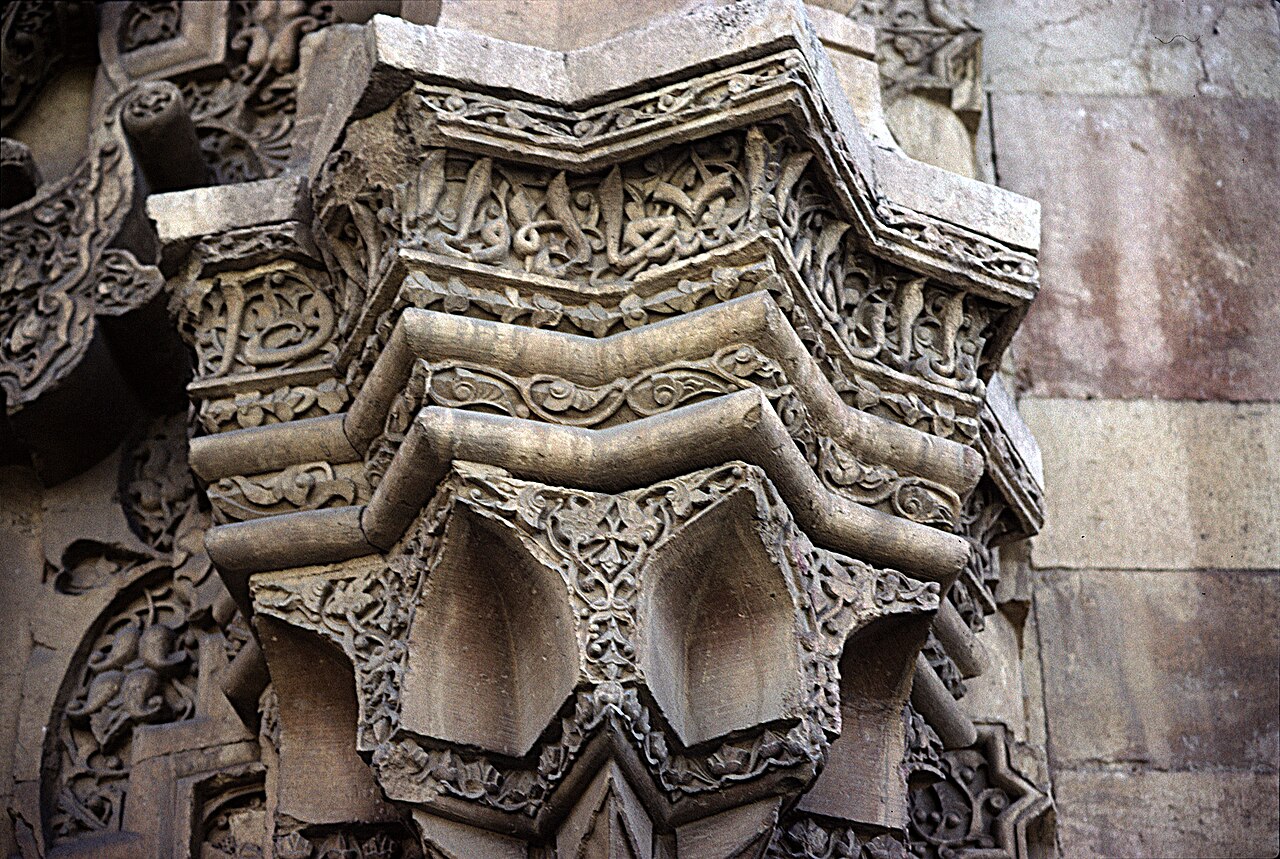
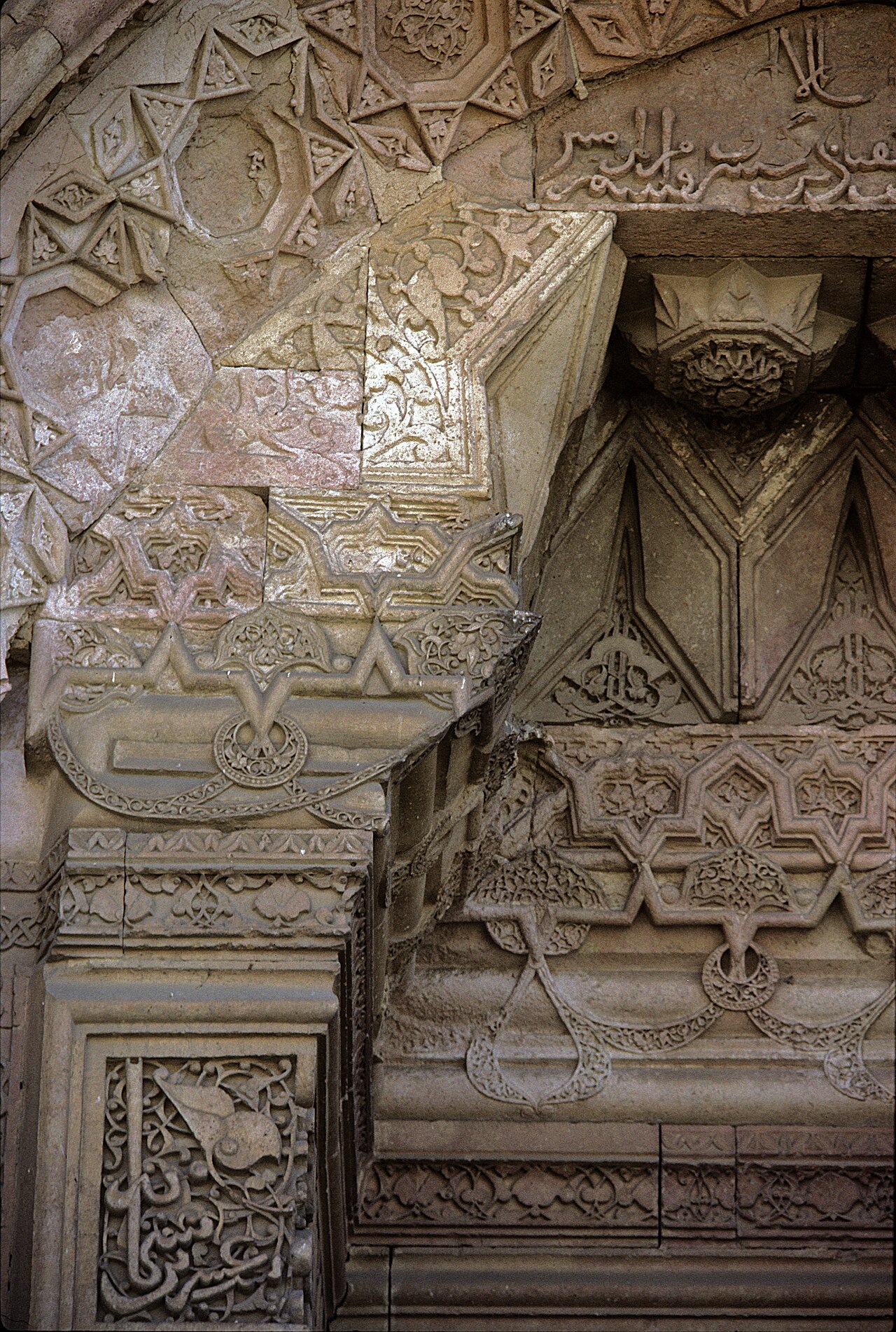
The Divriği Great Mosque and Hospital (Turkish: Divriği Ulu Cami ve Darüşşifası) was constructed in 1228–1229 under the Mengujekids, a local dynasty ruling the small Anatolian town of Divriği, located in what is now Sivas Province, Turkey. The complex sits in the upper part of the town, beneath the citadel. Its elaborate stone carvings and blend of architectural styles make it a standout work in Anatolia, earning it a spot on the UNESCO World Heritage List in 1985.
Divriği (ancient Tephrike) was founded in the 9th century by the Paulicians as a fortress city and breakaway state, later reconquered by the Byzantines in the 10th century. After the Byzantine defeat at the Battle of Manzikert in 1071, Turkish tribes moved in and settled the area. Anatolia then fell under the control of various competing beyliks, local Turkish dynasties and Seljuk offshoots. In the 12th century, the Mengujekids (or Mengücek dynasty) held Divriği and nearby cities like Erzincan. After the death of Emir İshak, the dynasty split into two branches: one ruling from Divriği, the other from Erzincan. The Mengujekids had marriage ties with the Seljuks of Konya, though their relationship was variable and not consistently one of acknowledged protectorship. The Mengücek rulers were strong patrons of arts, science, and literature. Art historian Doğan Kuban suggests this may explain why exceptional artists were available in the city for the mosque and hospital’s construction. He also notes the region’s diverse and dynamic cultural environment at the time, with artisans traveling from patron to patron, creating an eclectic architectural style influenced by various traditions.
The north portal of the mosque bears the date 626 AH (1228–1229) and names its patron as Ahmadshāh ibn Sulaymān, a ruler of the Divriği branch of the Mengujekids. The hospital’s portal inscription calls it a dār al-shifā' ("house of healing") and credits its foundation to Tūrān Malik bint Fakhr al-Dīn Bahramshāh. Fakhr al-Dīn Bahramshāh, the best-known Mengujekid ruler, reigned in Erzincan for nearly sixty years until his death in 1225. Tūrān Malik was the daughter of Fakhr al-Dīn Bahramshāh and the wife of Ahmadshāh, as confirmed by scholarly sources. The chief architect’s name, inscribed inside both the mosque and hospital, is read as Khurramshāh ibn Mughīth al-Khilātī, indicating his origin in the city of Ahlat, known
- built
- 1228–1229
- location
- Divriği, Sivas Province, Turkey
- patrons
- Ahmadshāh ibn Sulaymān and Tūrān Malik bint Fakhr al-Dīn Bahramshāh
- architect
- Khurramshāh ibn Mughīth al-Khilātī
- dynasty
- Mengujekids
- world_heritage
- 1985
Lore & Background
The city of Divriği (ancient Tephrike) was founded in the 9th century by the Paulicians as a fortress city and breakaway state, later reconquered by the Byzantines in the 10th century. After the Battle of Manzikert (1071) it was occupied by Turkish tribes. In the 12th century, the Mengujekids controlled Divriği and other nearby cities. After the death of emir İshak, the dynasty split into two branches, one ruling from Divriği and the other from Erzincan. The Mengujekids had marriage ties with the Seljuks of Konya, though their relationship was variable and not consistently one of acknowledged protectorship. The Mengücek rulers were great patrons of arts, science, and literature, which may account for the presence of exceptional artists in the city.
The north portal of the mosque gives the date of 626 AH (1228–1229) and the name of its patron as Ahmadshāh ibn Sulaymān. The hospital portal inscription ascribes its foundation to Tūrān Malik bint Fakhr al-Dīn Bahramshāh. Tūrān Malik was the daughter of Fakhr al-Dīn Bahramshāh and the wife of Ahmadshāh, as confirmed by scholarly sources.
Reader's Guide
The Divriği Great Mosque and Hospital is a landmark of medieval Anatolian architecture, reflecting the diverse and dynamic cultural environment of the period. Its stone carvings and eclectic style, influenced by traveling artisans, are considered among the finest in the region. The complex consists of a mosque adjoining a hospital, with a mausoleum attached. The mosque's main northern portal is celebrated for its high-relief carving, while the hospital portal features a monumental pointed arch. The interior of the mosque includes stone piers and vaults, with a central bay open to the sky. The hospital has rooms and iwans around a covered courtyard with a pool. The site's inclusion on the UNESCO World Heritage List in 1985 underscores its global significance. The complex also preserves original wooden furnishings, including a minbar dated to 1243. The restoration history, spanning centuries and culminating in 2024, highlights ongoing efforts to preserve this architectural treasure.
Did You Know?
- The complex was built in 1228–1229 by the Mengujekid dynasty.
- The chief architect, Khurramshāh ibn Mughīth al-Khilātī, originated from the city of Ahlat.
- The hospital is described in its inscription as a dār al-shifā' (house of healing).
- The mosque's wooden minbar is dated to 1243 and signed by the craftsman Ibrahīm ibn Ahmad al-Tiflīsī.
A Dynasty's Cultural Ambition
The small Anatolian town of Divriği, situated in today's Sivas Province, traces its origins to the 9th century under Byzantine control. That era ended with the Battle of Manzikert in 1071, after which Turkish tribes settled the region and Anatolia became a patchwork of competing beyliks. By the 12th century, the Mengujekid dynasty held sway over Divriği and neighboring Erzincan. After the death of emir İshak, the dynasty split into two branches, one governing from each city. The Mengujekids maintained ties by marriage to the Seljuks of Konya and recognized the Sultanate of Rum as their protectors during its peak. Crucially, these rulers were devoted patrons of arts, science, and literature. Art historian Doğan Kuban suggests this patronage attracted a concentration of exceptional artists to the region. The broader cultural landscape was diverse and dynamic, with groups of craftsmen traveling between patrons, producing an eclectic architectural vocabulary that blended multiple traditions. This environment set the stage for one of Anatolia's most remarkable building complexes.
Stone, Light, and Eclectic Form
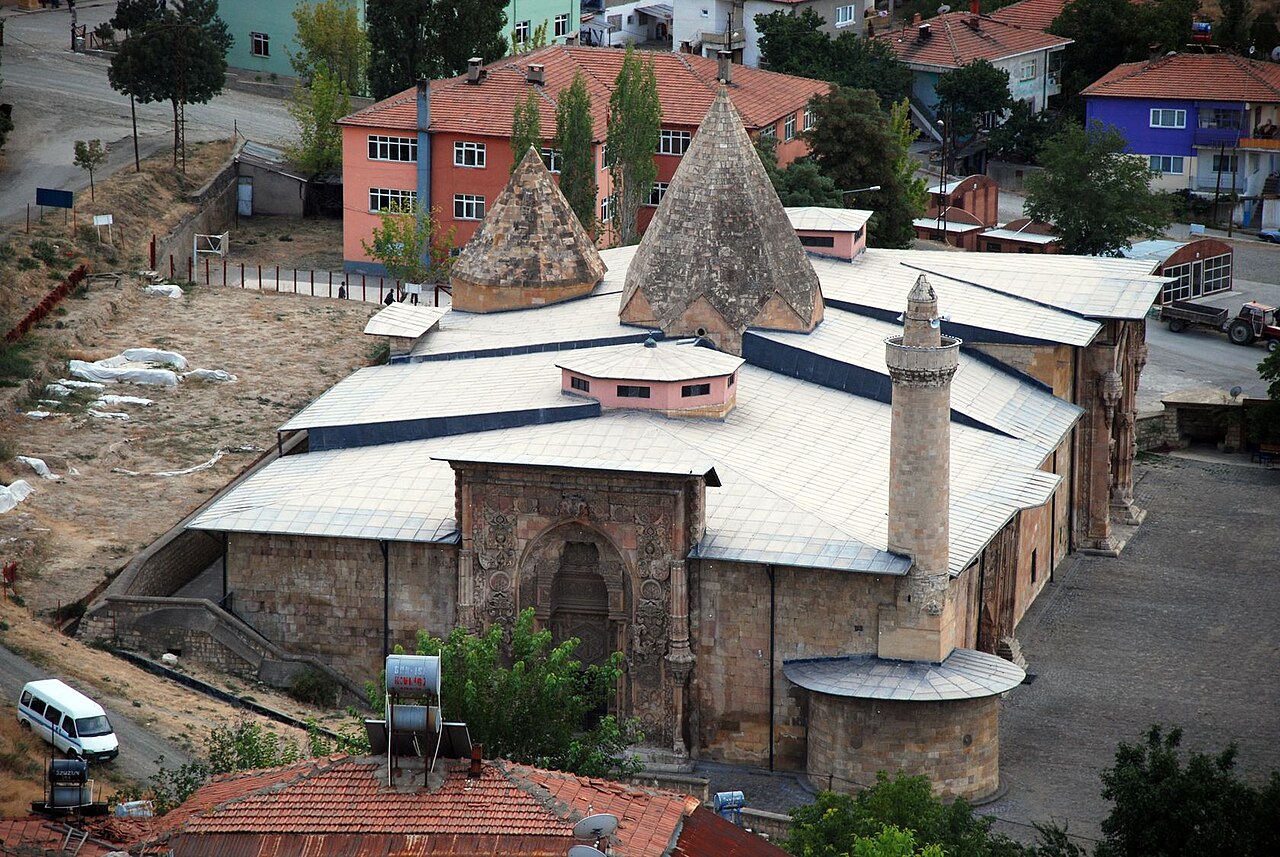
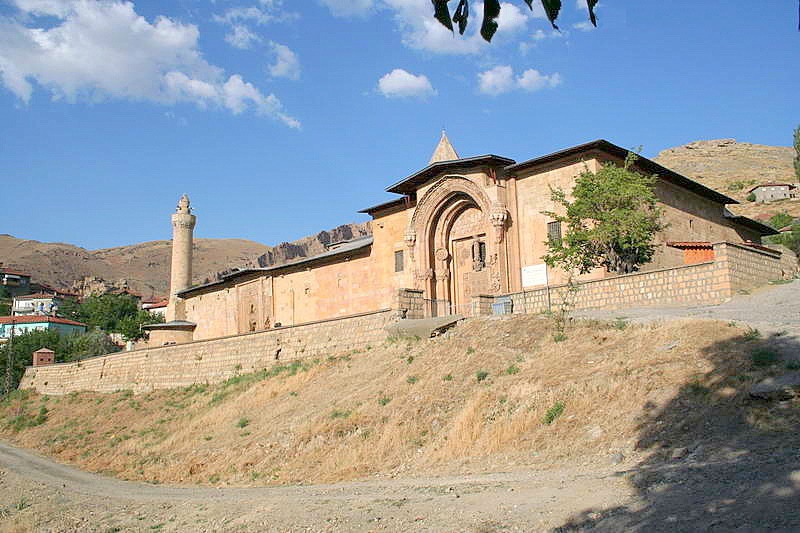
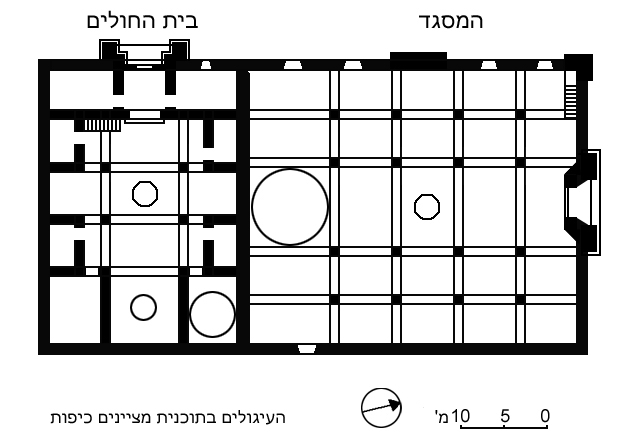
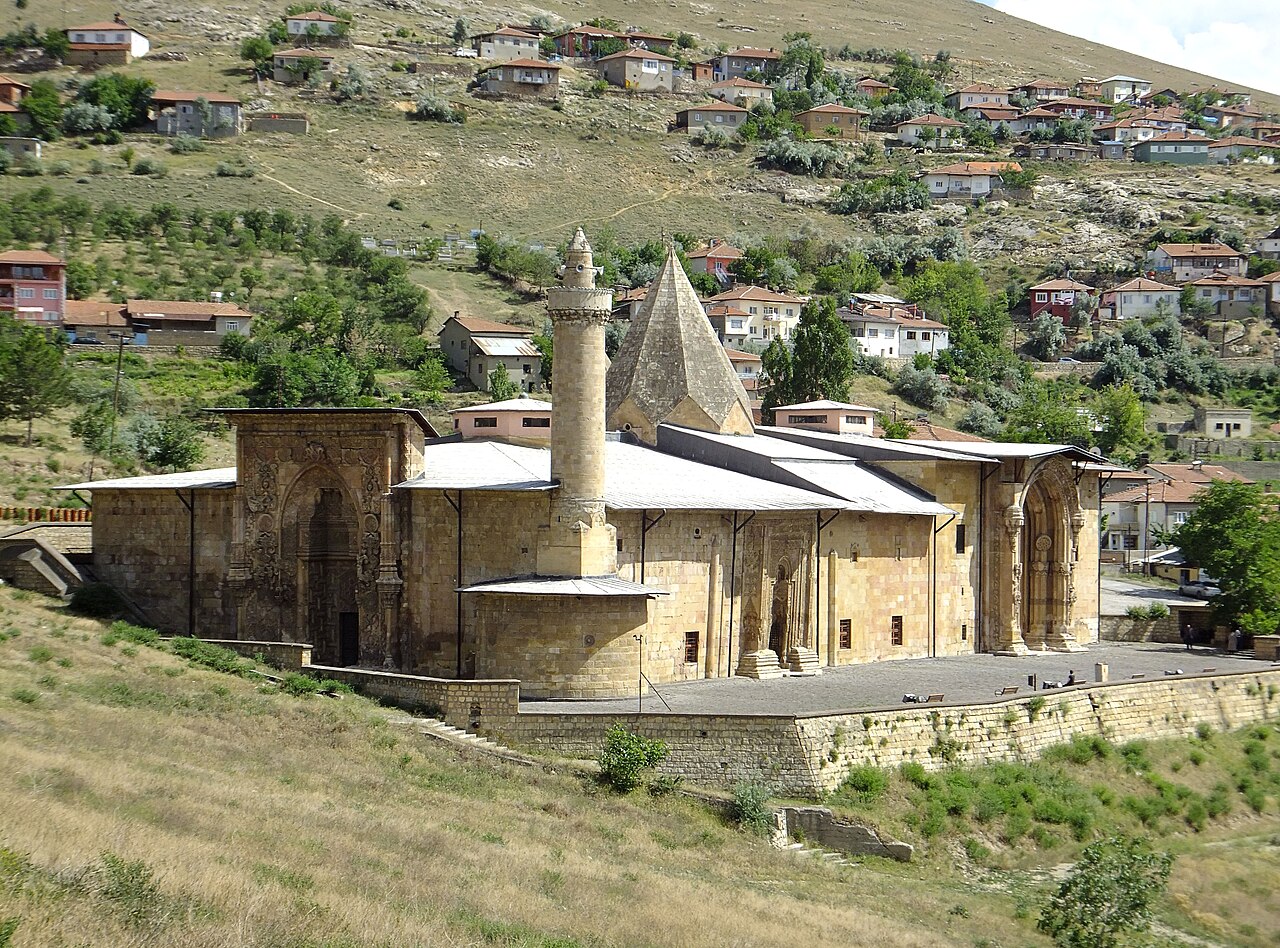
The complex pairs a mosque and a hospital that share a southern qibla wall, with a mausoleum attached to the hospital. The mosque's principal entrance faces north and is dominated by a tall portal celebrated for the extraordinary density and quality of its high-relief stone carving. A western entrance, likely later in origin, was added after that façade collapsed and was rebuilt with a round buttress at the north-western corner. A third, eastern entrance served as a royal access point to a raised wooden platform in the southeastern interior, reserved for the ruler and his entourage. Inside, stone piers carry stone vaults, and the central bay appears to have been left open to the sky, a feature shared with other courtyard-less medieval Anatolian mosques. The hospital, entered through a western portal framed by a monumental pointed arch with a central window, encloses a covered courtyard with a small pool, surrounded by rooms and iwans. Its stone carving matches the mosque's quality but is less dense, and in places appears unfinished.
Hands Behind the Masterpiece
The north portal inscription names Ahmadshāh ibn Sulaymān, a ruler of the Divriği branch of the Mengujekids, as the mosque's patron and gives the date 626 AH (1228–1229). The hospital portal describes the building as a dār al-shifā', a 'house of healing,' and credits its foundation to Tūrān Malik bint Fakhr al-Dīn Bahramshāh, whose father ruled Erzincan for nearly sixty years until 1225. Although popular assumption links the two patrons by marriage, no inscriptional or other evidence confirms such a relationship. The chief architect, whose name appears in the interiors of both buildings, has been read as Khurramshāh ibn Mughīth al-Khilātī, indicating origin in the city of Ahlat, known in medieval sources as al-Khilāt. Other craftsmen left their marks: a wooden minbar dated to 1243 bears the signature of Ibrahīm ibn Ahmad al-Tiflīsī. The eclectic style of the complex reflects a broader pattern of itinerant artisans moving between patrons across the region, carrying influences from diverse traditions.
A Century-Long Struggle for Survival
Inscriptions record significant restoration work carried out on the complex multiple times between the 15th and 19th centuries. Additional interventions in the 20th century addressed material deterioration and structural concerns. The complex's inclusion on UNESCO's World Heritage List in 1985 recognized its standing among Anatolia's most important architectural works. In 2010, another major restoration was decided upon. After years of preparation, the first tender was held in 2015 and work commenced. The project was then halted and resumed in 2017, only to stop again in 2019 for financial reasons, though many stages were already complete by that point. A new tender followed in 2021, and in February 2022 work resumed on the final phases. The mosque was finally reopened to visitors in May 2024, marking the completion of a restoration process that spanned nearly a decade of intermittent labor.
Gallery
Frequently Asked Questions
Who built the Divriği Great Mosque and Hospital?
The complex was commissioned by Ahmadshāh ibn Sulaymān and his wife Tūrān Malik, rulers of the Mengujekid dynasty that controlled the small Anatolian town of Divriği. The architect credited with the design was Khurramshāh ibn Mughīth al-Khilātī.
Where is the Divriği Great Mosque and Hospital located?
It stands in the upper part of Divriği, a town in Sivas Province, Turkey, tucked just below the old citadel. The settlement itself dates back to the 9th century, when the Paulicians first established it as a fortress city.
Why is the Divriği Great Mosque and Hospital a UNESCO World Heritage Site?
UNESCO inscribed the complex in 1985 because its extraordinarily detailed stone carvings and the way it fuses multiple architectural traditions make it a singular achievement in Anatolian design. It is widely regarded as one of the finest surviving examples of Seljuk-era religious and medical architecture.
What was the purpose of the Divriği Great Mosque and Hospital?
Constructed between 1228 and 1229, the complex served a dual role: the mosque functioned as a place of worship, while the attached darüşşifa operated as a hospital. Combining both under one roof was a relatively uncommon arrangement for the period.
What makes the Divriği Great Mosque and Hospital architecturally unique?
Its exterior and interior surfaces are covered in incredibly intricate geometric and vegetal stone carvings that few contemporary buildings can rival. The structure also weaves together elements from several regional and cultural design traditions into a single cohesive whole, which is why scholars consistently call it a masterpiece of Anatolian architecture.
More in World Heritage Sites in Turkey 1-24
Spotted an error? Know more?
This is a living reference — every entry is fact-audited, and reader corrections feed straight into our audit queue. Suggest an edit · See this site's audit record