
Bayezid I Mosque
Historic Ottoman mosque in Bursa built by Sultan Bayezid I.

Yahia.Mokhtar · CC BY-SA 4.0
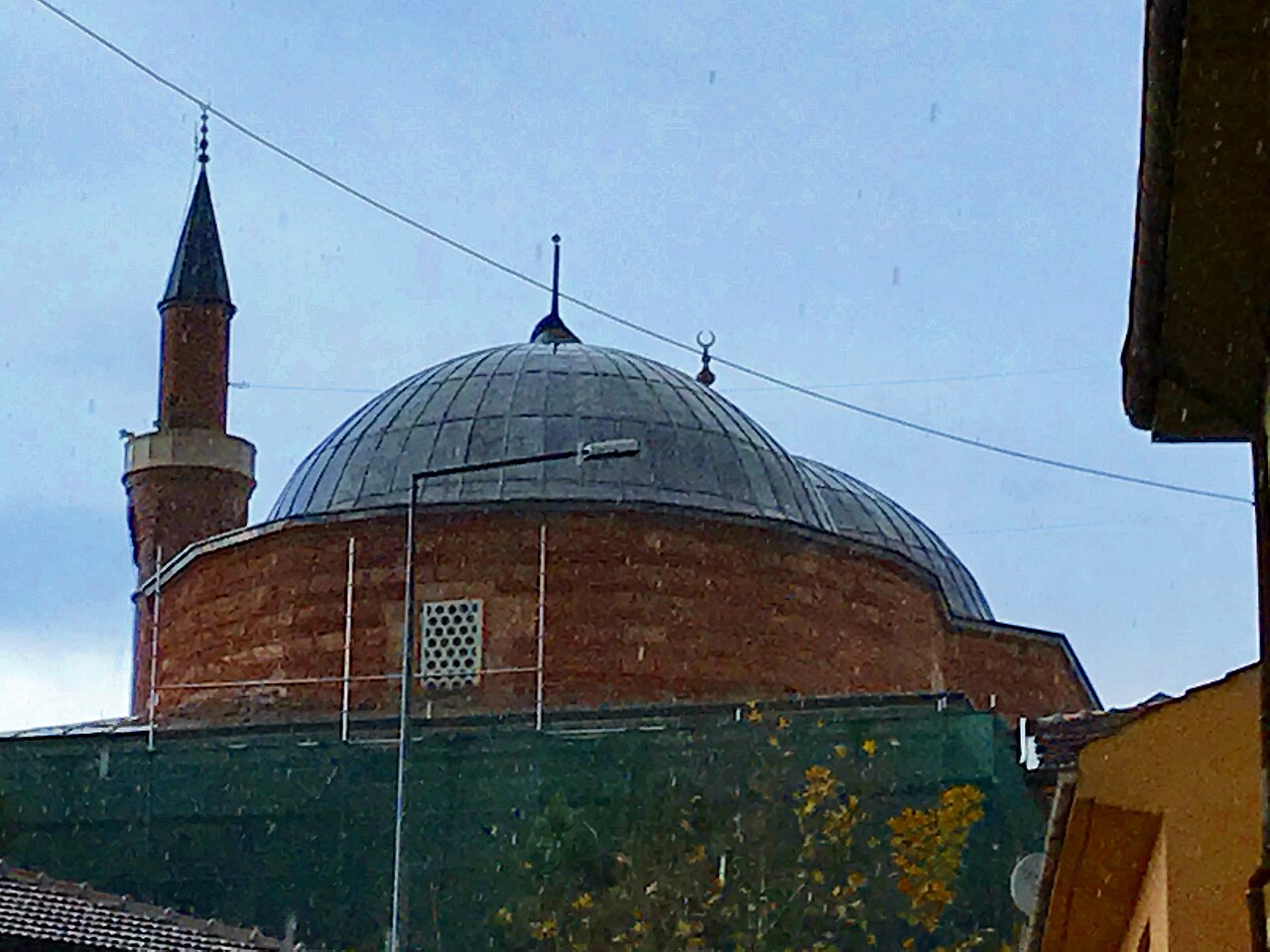
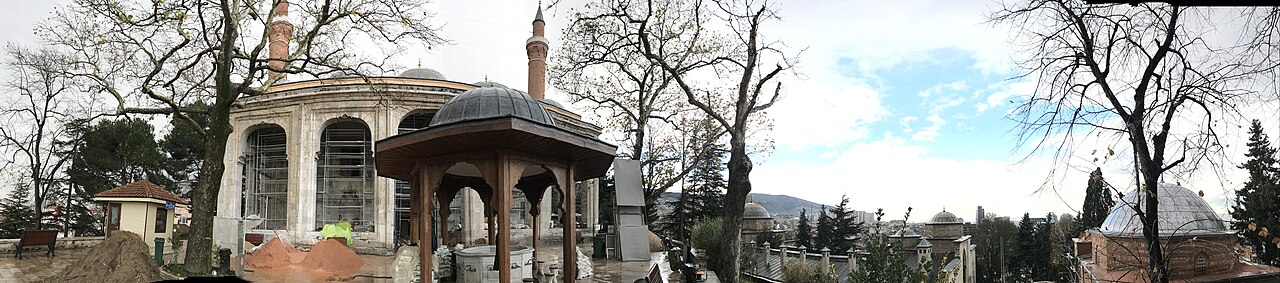
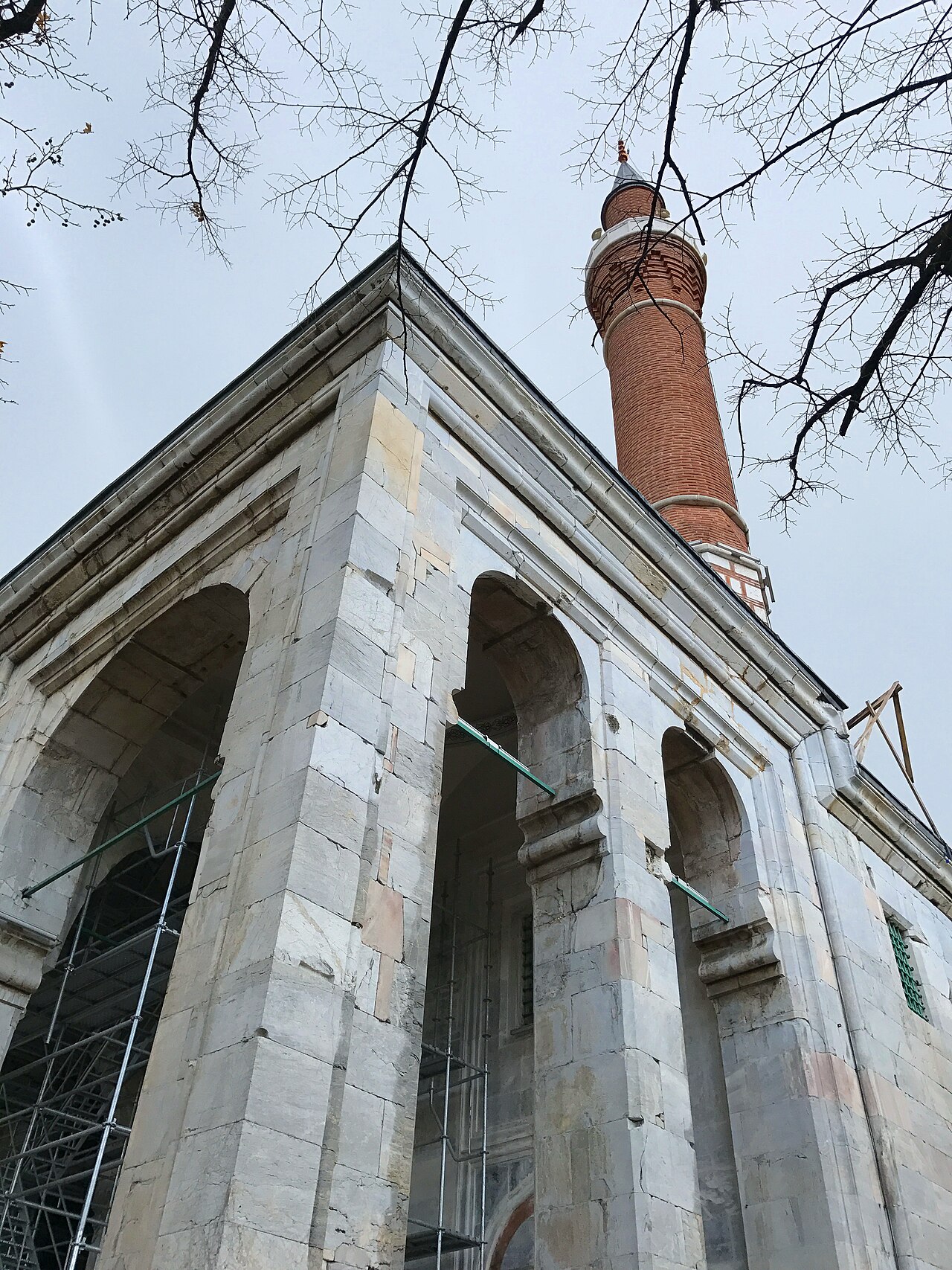
The Bayezid I Mosque, also known as Yıldırım Camii or Yıldırım Bayezid Camii, is a historic mosque in Bursa, Turkey. It is part of a large complex (külliye) built by the Ottoman Sultan Bayezid I between 1391 and 1395. The mosque is situated in the Bursa metropolitan district of Yıldırım, named after the same sultan, and underwent extensive renovation following the 1855 Bursa earthquake.
- Notable Feature
- Features an early example of a Bursa Arch
Lore & Background
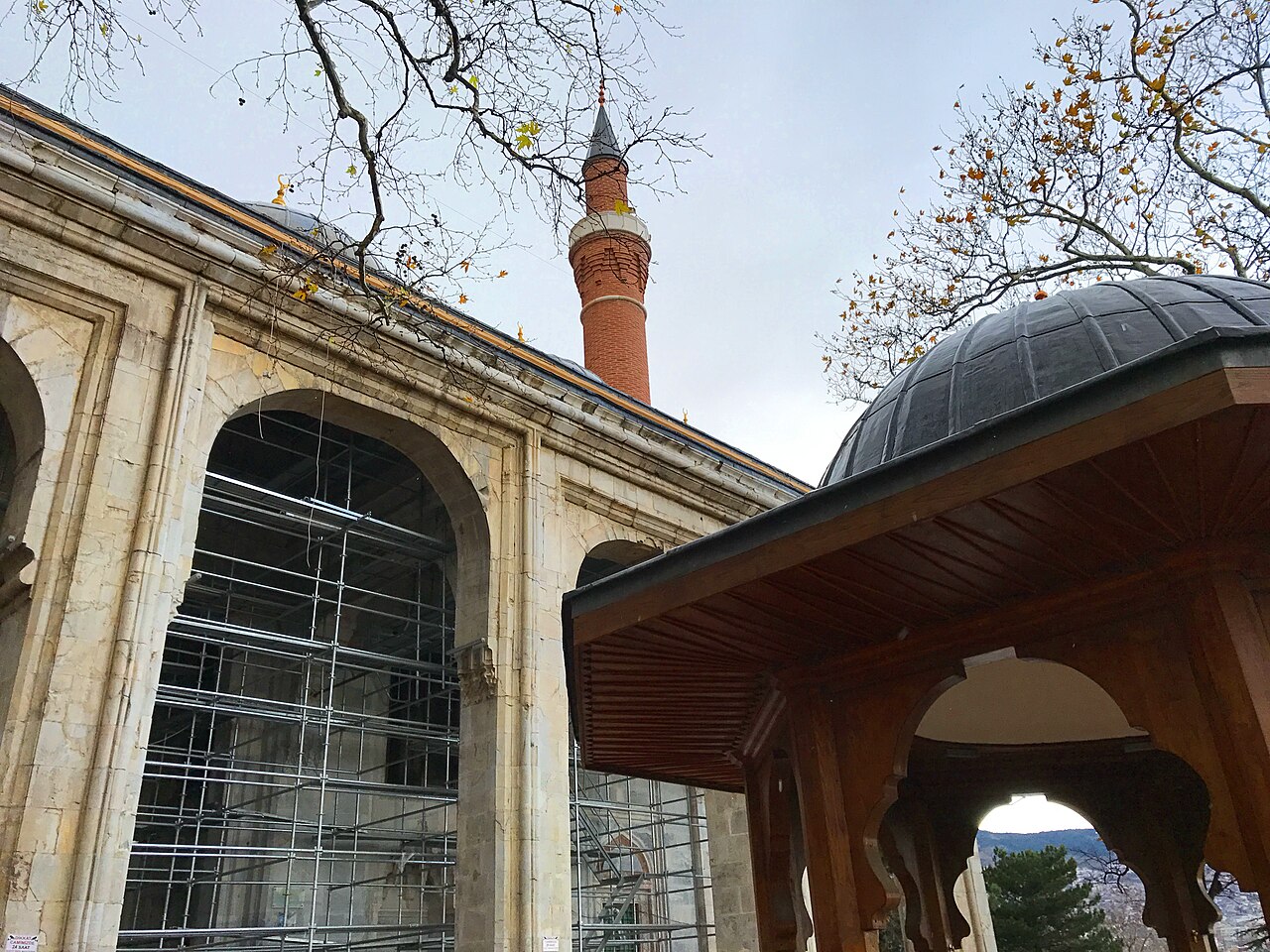
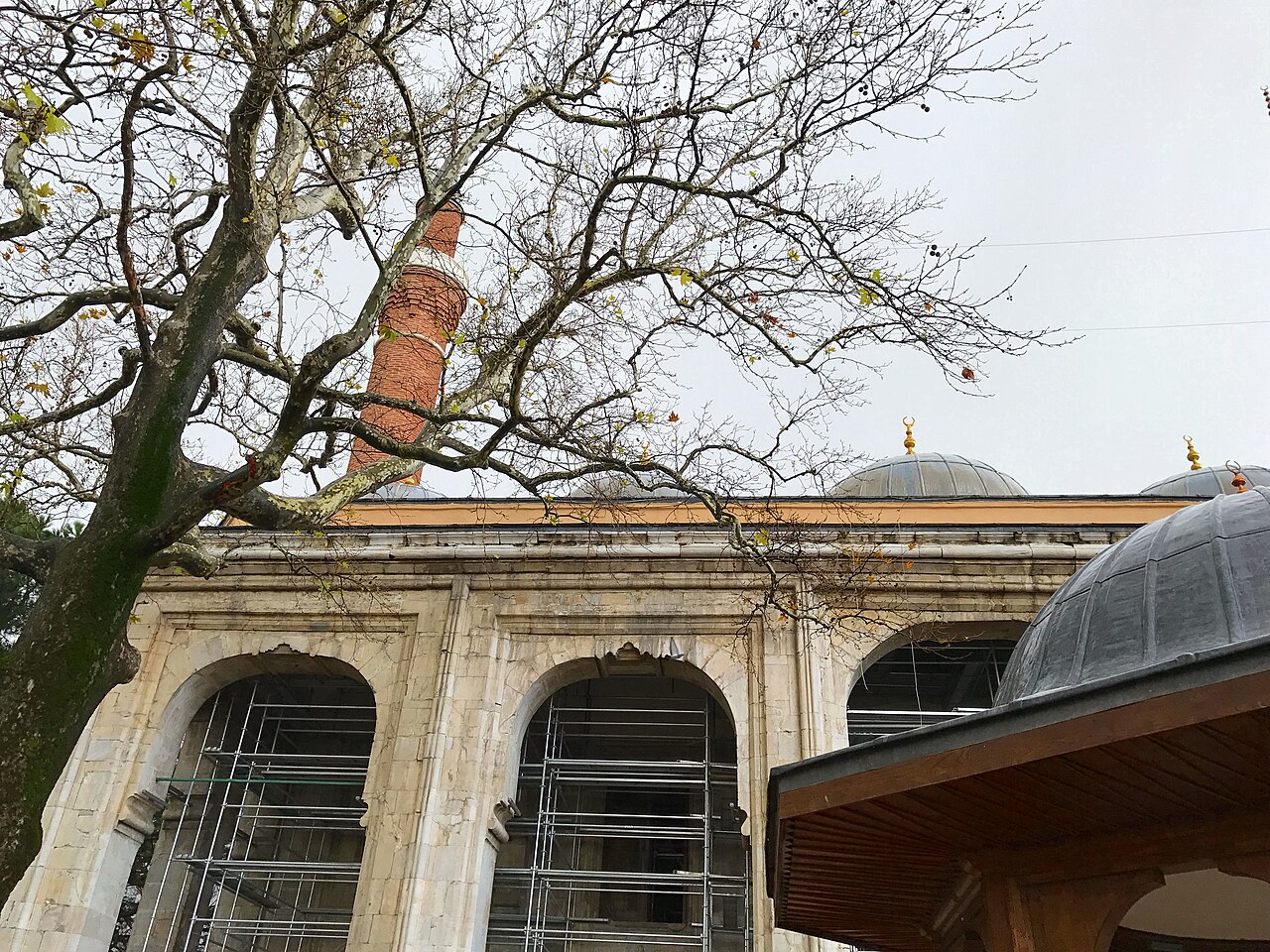
The mosque comprises a central hall with a large dome flanked by eyvans on the east and west with smaller domes and another large domed eyvan with mihrab on the south. There are four rooms with fireplaces and cupboards to the north and south of the side of the eyvans. The southern rooms are accessed directly from the central hall while the northern rooms are accessed through small vestibules. Each northern room also contains two niches on the sides that are accessed through the vestibules. The entrance hall features high domed ceilings, and the last prayer section at the north end is built with five sub-sections, each covered with an individual dome.
Reader's Guide
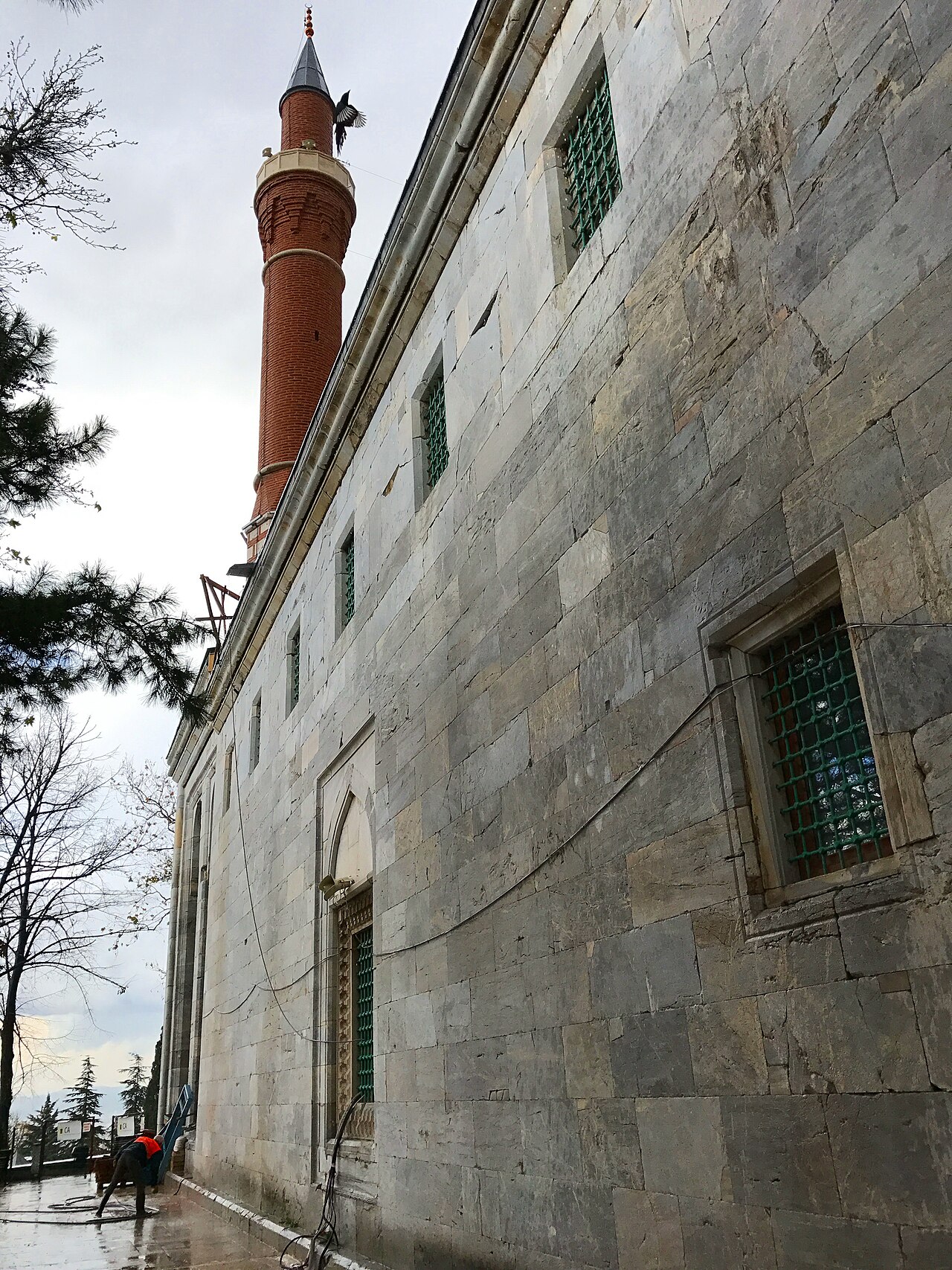
The Bayezid I Mosque is significant as a key example of early Ottoman architecture in Bursa, the first capital of the Ottoman Empire. Its construction between 1391 and 1395 under Sultan Bayezid I reflects the empire's growing architectural ambition. The mosque is notable for being the first structure to implement a Bursa Arch, a flattened arch located between the central hall and the south eyvan, which connects and supports the two large domes. Unlike similar mosques of its time in Bursa, Yıldırım Camii was constructed entirely out of dimension stones, with no bricks used in any part. The mosque's layout, with three eyvans built three steps higher than the central hall, and its two minarets, mark a departure from earlier designs. The complex underwent extensive renovation after the 1855 Bursa earthquake, ensuring its preservation. The mosque remains a central landmark in the Yıldırım district, named after the sultan, and continues to be a site of historical and architectural study.
Did You Know?
- The mosque was built between 1391 and 1395 by Ottoman Sultan Bayezid I.
- It features an early example of a Bursa Arch, a flattened arch connecting the central hall and south eyvan, though earlier examples exist.
- Unlike similar mosques of its time in Bursa, it was constructed using alternating courses of stone and brick, not entirely out of dimension stones.
- The mosque underwent extensive renovation following the 1855 Bursa earthquake.
Commission and Historical Setting
The Yıldırım Bayezid Mosque stands as a testament to the ambitions of one of the Ottoman Empire's most formidable rulers. Sultan Bayezid I, whose epithet 'the Thunderbolt' captured his fierce military temperament, directed the construction of this grand religious complex between 1391 and 1395. Rather than commissioning a standalone prayer house, he envisioned an expansive külliye—a multifaceted institutional ensemble designed to serve the spiritual and social needs of the surrounding community. The mosque found its home in what is now the Yıldırım district of Bursa, a metropolitan area that still bears the sultan's name, a fitting tribute to the ruler who shaped the city's identity. The structure's history is not without turbulence. When the devastating Bursa earthquake struck in 1855, the mosque sustained significant damage and required extensive renovation to restore its structural integrity. Despite this seismic trial, the complex endures as one of Bursa's most important Ottoman-era monuments, a physical link to the fourteenth century when the young Ottoman state was consolidating its power in the Anatolian heartland.
Spatial Composition and Interior Layout
The interior plan of the Yıldırım Camii reveals a carefully orchestrated hierarchy of sacred and functional spaces. At its heart lies a central prayer hall crowned by a commanding dome, creating a focal point of verticality and light. This core space is bracketed on the east and west by eyvans—semi-open vaulted chambers—each topped with a smaller dome, while a third, larger domed eyvan on the southern side houses the mihrab, the prayer niche oriented toward Mecca. Flanking these eyvans on both the northern and southern sides are four ancillary rooms equipped with fireplaces and built-in cupboards, suggesting practical uses beyond worship. The circulation logic is deliberate: the southern rooms open directly into the central hall, granting immediate access, whereas the northern rooms are reached through narrow vestibules, and each of these vestibules also provides entry to two side niches. The entrance hall is distinguished by its soaring domed ceilings, setting a tone of grandeur from the very threshold. At the northern extremity, the semi-open last prayer section is divided into five subsections, each sheltered beneath its own individual dome, creating a rhythmic sequence of vaulted spaces.
Structural Innovation and Material Distinction
Two engineering choices set the Yıldırım Camii apart from its Bursa contemporaries and cemented its place in architectural history. First, the mosque introduced what is now recognized as the Bursa Arch—a flattened arch form positioned between the central hall and the southern eyvan. This structural element served a dual purpose: it physically connected the two large domes while distributing their considerable weight, effectively acting as a load-bearing bridge. The fact that this was the first known implementation of the arch type in the region marks the mosque as a genuine point of innovation rather than mere replication. Second, the building's material palette was strikingly uniform. Where other mosques of the same era in Bursa incorporated brick into their construction, the Yıldırım Camii was raised entirely from dimension stones, with not a single brick used anywhere in the structure. This choice gave the exterior a monolithic, precisely cut appearance and speaks to the high level of masonry skill available in Bursa during the early Ottoman period. Additionally, the three eyvans each stood three steps above the central hall's floor level, a subtle but meaningful spatial gesture that reinforced the architectural hierarchy and created a sense of ascending sacredness toward the prayer niche.
Enduring Legacy and Urban Identity
The Yıldırım Bayezid Mosque's influence extends far beyond its walls, embedding itself in the very geography and architectural vocabulary of Bursa. The metropolitan district in which it stands carries the sultan's name—Yıldırım—ensuring that his legacy is invoked with every address, every municipal reference, every daily mention of the neighborhood. This naming is not incidental; it reflects how central the külliye was to the urban fabric and civic identity of the city. Architecturally, the mosque's pioneering use of the Bursa Arch established a structural precedent that subsequent builders in the region could reference and adapt, making the fourteenth-century structure a quiet but persistent influence on Ottoman construction techniques. The decision to build exclusively with dimension stones, eschewing the brick common to neighboring mosques, also set a material standard that distinguished the complex as a work of particular ambition and craftsmanship. Even after the 1855 earthquake forced a major restoration, the mosque retained its essential character, demonstrating the durability of its stone construction. Today, as part of the broader külliye, it continues to anchor the spiritual and cultural life of the district, a living monument to a sultan whose thunderbolt epithet belied a patron's eye for lasting beauty.
Gallery
Frequently Asked Questions
What is the Bayezid I Mosque?
It is a historic Ottoman-era mosque in Bursa, Turkey, more commonly known by its local name Yıldırım Camii or Yıldırım Bayezid Camii. The mosque serves as the anchor structure of a larger külliye (complex) commissioned by Sultan Bayezid I.
When was the Bayezid I Mosque built and by whom?
Sultan Bayezid I ordered the construction of the mosque and its surrounding complex between 1391 and 1395. It stands as one of the earliest major architectural statements of the Ottoman dynasty in the city of Bursa.
What makes the Bayezid I Mosque architecturally notable?
The mosque is recognized for housing an early example of the distinctive Bursa Arch, a structural element that became a hallmark of Ottoman mosque design. Because of this, the building is often cited as a key reference point in the development of that arch type.
How did the 1855 earthquake affect the Bayezid I Mosque?
The 1855 Bursa earthquake struck the structure hard enough to require extensive renovation work to restore it. Despite that damage, the mosque was rebuilt and has continued to stand as a functioning historic site in the city.
Where exactly is the Bayezid I Mosque located?
It sits within the Yıldırım district of Bursa's metropolitan area, a district that shares its name with the very sultan who commissioned the mosque. The complex occupies a prominent spot in the historic core of Bursa.
More in World Heritage Sites in Turkey 1-24
Spotted an error? Know more?
This is a living reference — every entry is fact-audited, and reader corrections feed straight into our audit queue. Suggest an edit · See this site's audit record