
Bin Tepe
Ancient Lydian elite cemetery with over 100 tumuli.

Volker Höhfeld · CC BY-SA 4.0
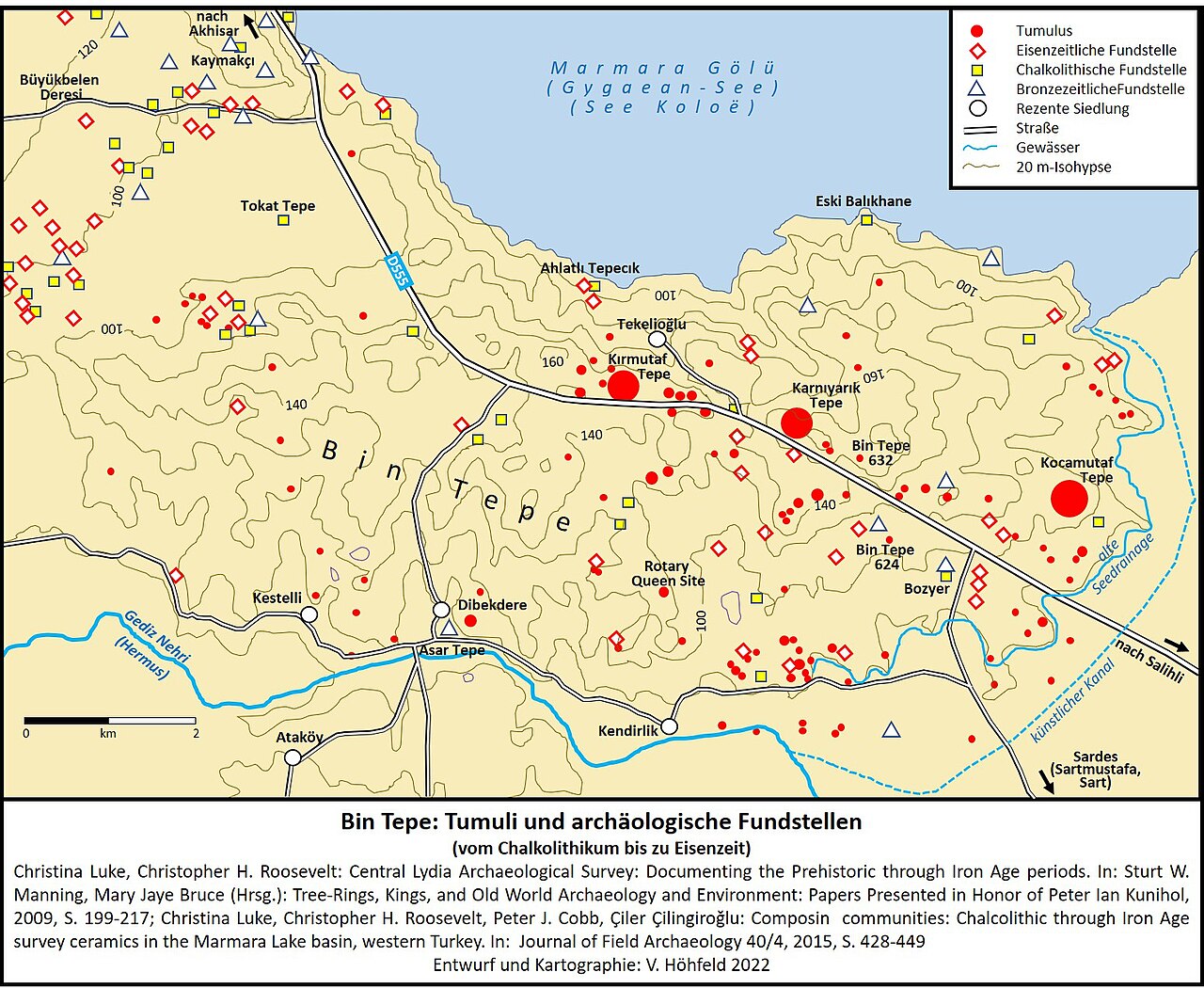
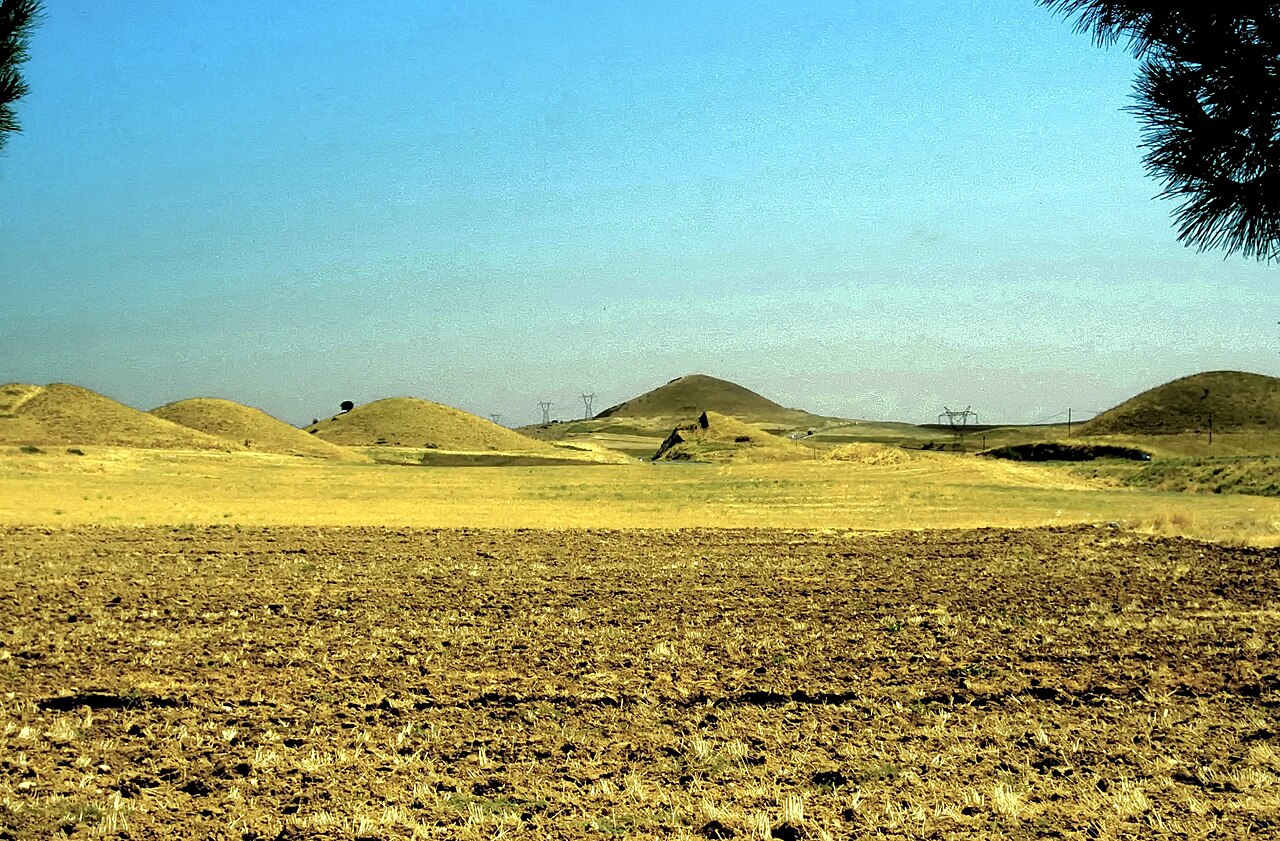
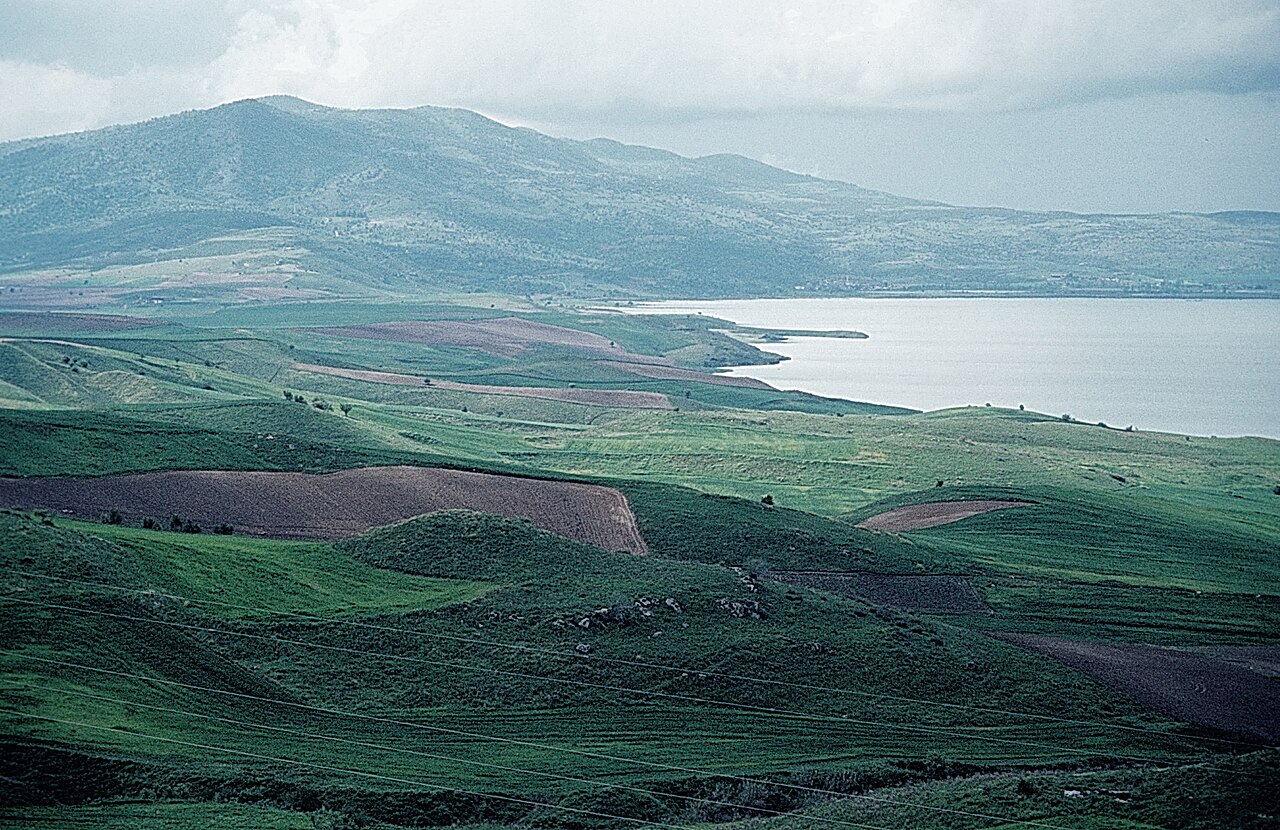
Bin Tepe, whose Turkish name means “a thousand tells,” is a burial ground on the southern edge of Marmara Lake in Manisa Province, Turkey. It holds more than 100 tumuli and was the cemetery for the wealthy and powerful of Sardis, the nearby Lydian capital, during both the Lydian and Achaemenid eras. In 2025, it became part of a UNESCO World Heritage Site that also includes the ancient city of Sardis.
The site lies on a low limestone ridge north of Sardis. Its height and position along a major travel route made the mounds stand out to ancient travelers, just as they do today. The area also contains older Bronze Age settlement mounds, which may have influenced the choice of location, perhaps to create a symbolic connection with the past. The burials were arranged in clusters, likely tied to families or estates. Originally there were at least 149 tumuli, but only about 115 remain; the rest were destroyed to make way for farmland.
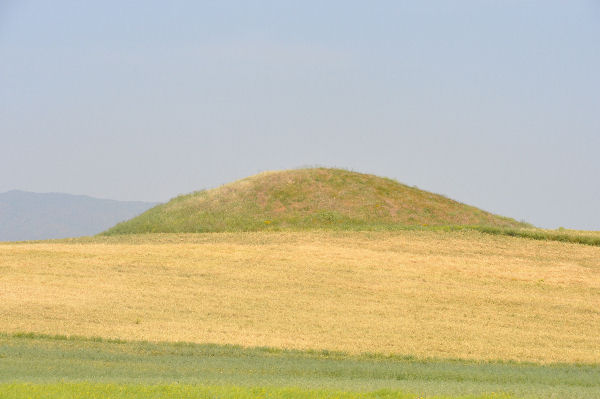
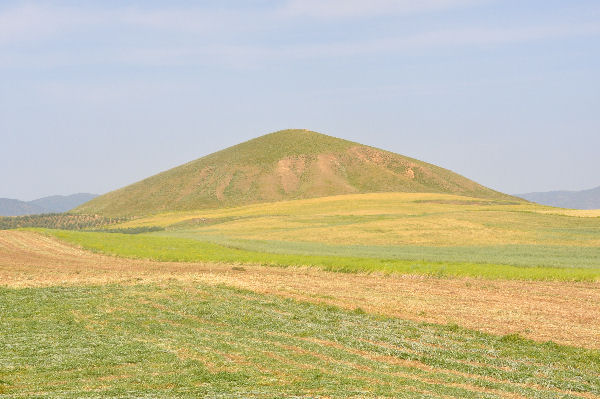
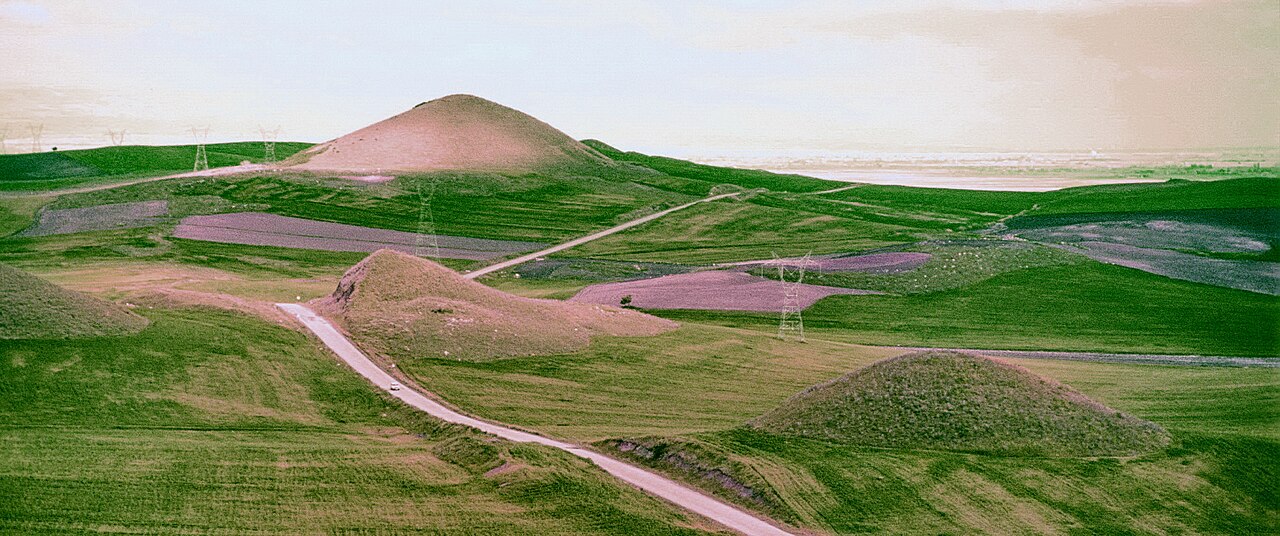
Each tumulus is a stone burial chamber covered by a large earthen mound. The chambers were built from stone slabs or cut into the bedrock, and they were usually placed off-center to discourage looters. Many mounds were once ringed with a retaining wall called a crepis, which gave the mound a clear edge and kept the dirt in place, though most of these walls are now gone.
The earliest tumuli at Bin Tepe date to around 600 BC and seem to have been inspired by Phrygian royal burials at Gordion. The style continued after the Lydian Empire fell in 546 BC, and many of the tumuli that can be dated were actually built during the Persian period that followed. Throughout their use at Sardis, these mounds existed alongside other burial types, such as rock-cut tombs and cist graves.
The largest tumulus, known in Turkish as Koca Mutaf Tepe, is generally accepted as the tomb of King Alyattes, who died in 560 BC. It stands 63 meters high, has a base diameter of 330 meters, and a volume of 785,000 cubic meters. Building it would have required about 2,400 laborers and 600 beasts of burden working for two and a half years. The burial chamber is made of limestone and marble, with masonry showing Greek and Near Eastern influences. Though designed to thwart grave robbers, it was heavily looted in antiquity, and no human remains or significant grave goods have been found.
Two other unusually large tumuli were once thought to be tombs of other Mermnad ki
- location
- Manisa Province, Turkey
- type
- Ancient cemetery of tumuli
- period
- Lydian and Achaemenid periods (from c. 600 BC)
- number_of_tumuli
- Over 100 (originally at least 149, now around 115)
- largest_tumulus
- Tumulus of Alyattes (63 m high, 330 m base diameter)
- UNESCO_listing
- 2025 (as part of larger site including Sardis)
Lore & Background
Bin Tepe sits on a low limestone ridge north of Sardis, its elevation and proximity to a major travel route making the tumuli conspicuous to ancient and modern visitors. The site's proximity to earlier Bronze Age settlement mounds suggests it may have been chosen to provide a symbolic link to the past. The burials were organized in groups, likely corresponding to families or estates. The tumuli consist of stone burial chambers covered by large earthen mounds, often ringed with a retaining wall called a 'crepis'. The earliest tumuli date from around 600 BC, seemingly adapted from Phrygian royal burials at Gordion, and the style remained in use after the fall of the Lydian Empire in 546 BC, with many datable examples constructed during the subsequent Persian period.
Reader's Guide
Bin Tepe is a key archaeological site for understanding Lydian and Persian-period Lydia. The Tumulus of Alyattes, the largest tumulus, is generally accepted as the tomb of the Lydian king Alyattes who died in 560 BC. It was described by Herodotus in his Histories, noting its construction by market men, artificers, and prostitutes. Despite heavy looting in antiquity, remaining evidence has provided insight into Lydian society and beliefs. The tumuli are particularly important for understanding the Persian Period of Lydian history, which is much better attested at Bin Tepe than at Sardis itself. The site's inclusion in a UNESCO World Heritage Site in 2025 underscores its global historical value.
Did You Know?
- The Tumulus of Alyattes has a height of 63 m and a base diameter of 330 m.
- It has been estimated that building the Tumulus of Alyattes would have taken two and a half years with 2,400 labourers and 600 beasts of burden.
- The second largest tumulus was traditionally attributed to King Gyges, but pottery fragments show it post-dates his reign by at least forty years.
- The tumuli were organized in groups, likely corresponding to families or estates.
The 2025 Inscription
Sardis and the Lydian Tumuli of Bin Tepe stands as the most recent addition to Turkey's UNESCO World Heritage portfolio, earning its place on the list in 2025. This inscription brings the total number of World Heritage Sites recognized within Turkish borders to twenty-two, with twenty classified as cultural and two as mixed, carrying both cultural and natural values. The site's arrival on the list marks a significant milestone in a heritage journey that began for Turkey in 1985, when the 9th Session of the World Heritage Committee first recognized three properties: Göreme National Park and the Rock Sites of Cappadocia, the Great Mosque and Hospital of Divriği, and the Historic Areas of Istanbul. Nearly four decades later, the Lydian Tumuli of Bin Tepe, paired with the ancient city of Sardis, represents the culmination of that ongoing process. As the latest entry, it underscores that Turkey's archaeological and cultural landscape continues to yield sites of international significance, expanding the narrative of what the nation contributes to the global heritage record.
Cultural Heritage Framework
Under the UNESCO World Heritage Convention, established in 1972, cultural heritage encompasses monuments such as architectural works, monumental sculptures, and inscriptions, as well as groups of buildings and sites that include archaeological locations. The Lydian Tumuli of Bin Tepe, inscribed alongside Sardis, falls squarely within this cultural heritage category. The convention's evaluation system requires every candidate site to satisfy at least one of ten established criteria, with criteria i through vi reserved for cultural properties and criteria vii through x addressing natural values. Because the Bin Tepe inscription is classified among Turkey's twenty cultural sites rather than its two mixed-designation entries, it necessarily meets one or more of the cultural criteria. This framework ensures that recognition is not merely honorary but is anchored in specific, articulated values—whether the site exemplifies a masterpiece of human creative genius, bears an exceptional testimony to a cultural tradition, or represents a significant type of architectural or archaeological ensemble. The criteria-based approach gives the 2025 inscription of Sardis and the Lydian Tumuli of Bin Tepe a defined intellectual foundation within the broader international heritage system.
Turkey's Four-Decade Heritage Arc
Turkey's engagement with the UNESCO World Heritage system traces back to March 16, 1983, when the nation formally accepted the convention that had been established in 1972. The first Turkish properties to receive World Heritage status came just two years later, at the 9th Session of the World Heritage Committee in 1985, when Göreme National Park and the Rock Sites of Cappadocia, the Great Mosque and Hospital of Divriği, and the Historic Areas of Istanbul were all inscribed simultaneously. From that initial trio, Turkey's portfolio has grown steadily to its current count of twenty-two sites. The 2025 addition of Sardis and the Lydian Tumuli of Bin Tepe represents the latest chapter in this four-decade arc, demonstrating that the country's rich archaeological and cultural landscape still holds properties worthy of international recognition. With eighty additional properties maintained on Turkey's tentative list, the pipeline for future nominations remains substantial, suggesting that the nation's World Heritage story is far from complete.
From Tentative to Inscribed
The path to World Heritage inscription is deliberately structured, and the tentative list serves as its essential gateway. Under the rules governing the convention, a member state's nomination for the World Heritage List is only accepted if the property in question has previously appeared on that country's tentative list. Turkey currently maintains eighty properties on its tentative list, a substantial reserve of sites that the nation may consider for formal nomination in the future. The fact that Sardis and the Lydian Tumuli of Bin Tepe reached full inscription in 2025 means it must have passed through this preliminary stage, having been identified, documented, and placed on the tentative list before its candidacy was formally advanced to the World Heritage Committee. This two-step process—tentative listing followed by nomination—ensures that states approach the international body with well-prepared, thoroughly researched proposals rather than spontaneous submissions. For a site to move from the eighty-property tentative roster to the twenty-two-site inscribed list, it must demonstrate that it meets at least one of the ten UNESCO criteria, making the journey from tentative to inscribed a rigorous filter that protects the integrity of the global heritage record.
Gallery
Frequently Asked Questions
What is Bin Tepe and where is it located?
Bin Tepe is an ancient burial mound complex perched on a low limestone ridge just south of Marmara Lake in Manisa Province, Turkey. Its Turkish name translates roughly to 'a thousand tells,' a nod to the dense cluster of earthen mounds that dominate the landscape.
What can visitors actually see at the site?
The complex holds over 100 surviving tumuli—originally at least 149—ranging from small mounds to the towering Tumulus of Alyattes, which stands 63 meters high with a base diameter of 330 meters. These mounds served as royal and elite tombs dating from roughly 600 BC through the Achaemenid period.
Who was buried at Bin Tepe?
The cemetery was reserved for the wealthiest and most powerful members of society in nearby Sardis, the Lydian capital, and continued to be used under Achaemenid Persian rule. It functioned as the exclusive burial ground for the ruling class across both the Lydian and Achaemenid eras.
When did Bin Tepe receive UNESCO World Heritage status?
In 2025, Bin Tepe was inscribed as part of a broader World Heritage Site that also includes the ancient city of Sardis. The joint listing underscores how the cemetery and the capital together tell the story of one of antiquity's most prosperous kingdoms.
Why is Bin Tepe considered important to archaeology?
Its elevated position along a major ancient travel corridor made the mounds visible landmarks for centuries, and the site preserves a rare, largely undisturbed record of Lydian and Achaemenid funerary customs. Studying the tumuli gives researchers direct insight into the social hierarchies and material wealth of the Lydian elite.
More in World Heritage Sites in Turkey 1-24
Spotted an error? Know more?
This is a living reference — every entry is fact-audited, and reader corrections feed straight into our audit queue. Suggest an edit · See this site's audit record