
Blue Mosque, Istanbul
Ottoman imperial mosque known for its blue Iznik tile interior.

Slyronit · CC BY-SA 4.0
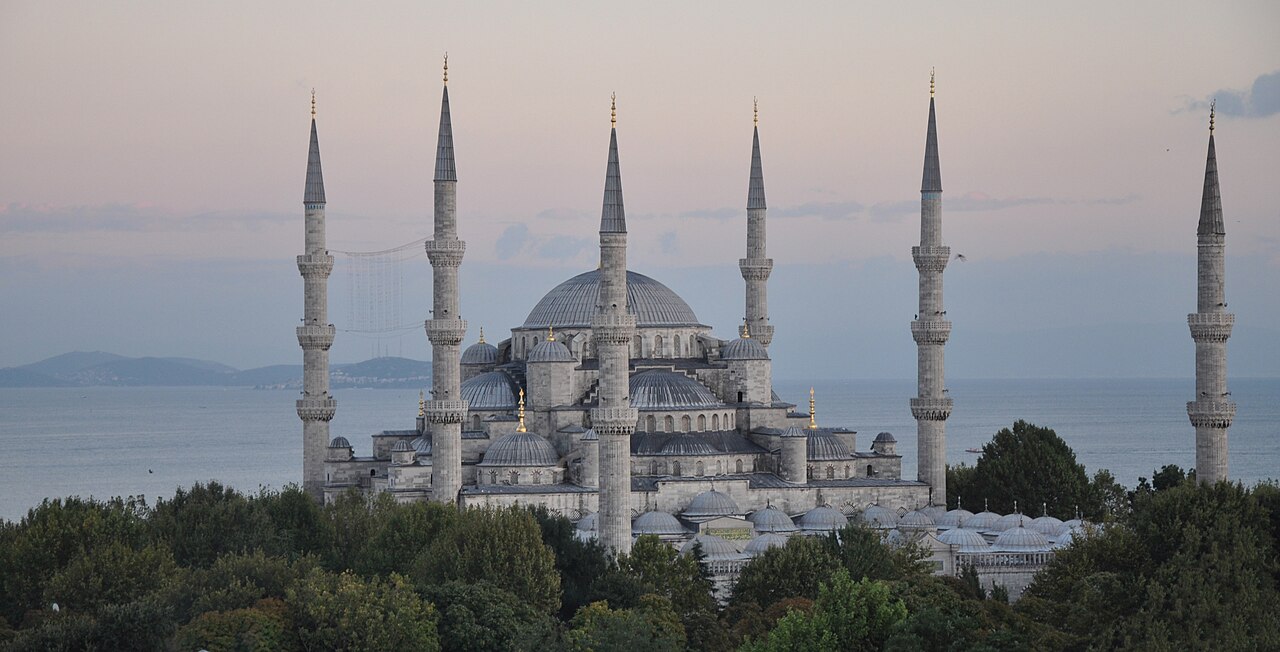
The Blue Mosque, officially known as the Sultan Ahmed Mosque, is an Ottoman-era imperial mosque in Istanbul, Turkey. Constructed between 1609 and 1617 under Sultan Ahmed I, it is one of the most iconic monuments of Ottoman architecture and a major tourist attraction.
- Built
- 1609–1617
- Location
- Istanbul, Turkey
- Architect
- Sedefkar Mehmed Agha
- Style
- Classical Ottoman
- Minarets
- 6
- UNESCO Status
- Included in Historic Areas of Istanbul (1985)
- Also known as
- Sultan Ahmed Mosque
Lore & Background
The mosque was built after the Peace of Zsitvatorok, which was seen as a blow to Ottoman prestige. Sultan Ahmed I hoped to solicit God's favor by constructing a large mosque. He was the first sultan to build an imperial mosque since Selim II, as Murad III and Mehmed III had not built their own. The site was originally occupied by the Hippodrome's bleachers and imperial box, and prior to construction, palaces of viziers such as Sokollu Mehmet Pasha and Güzel Ahmet Pasha stood there, requiring costly expropriation. This, along with economic stress, led the ulema to protest, arguing sultans should only fund mosques with spoils of conquest; they forbade Muslims from praying there. Despite opposition, construction proceeded from 1609 to 1617, though some inscriptions mention 1616. Ahmed I died around 1617, and the last accounting reports were signed by his successor Mustafa I, suggesting the project was not fully complete at his death. The mosque's grandeur and public ceremonies eventually swayed public opinion.
Reader's Guide
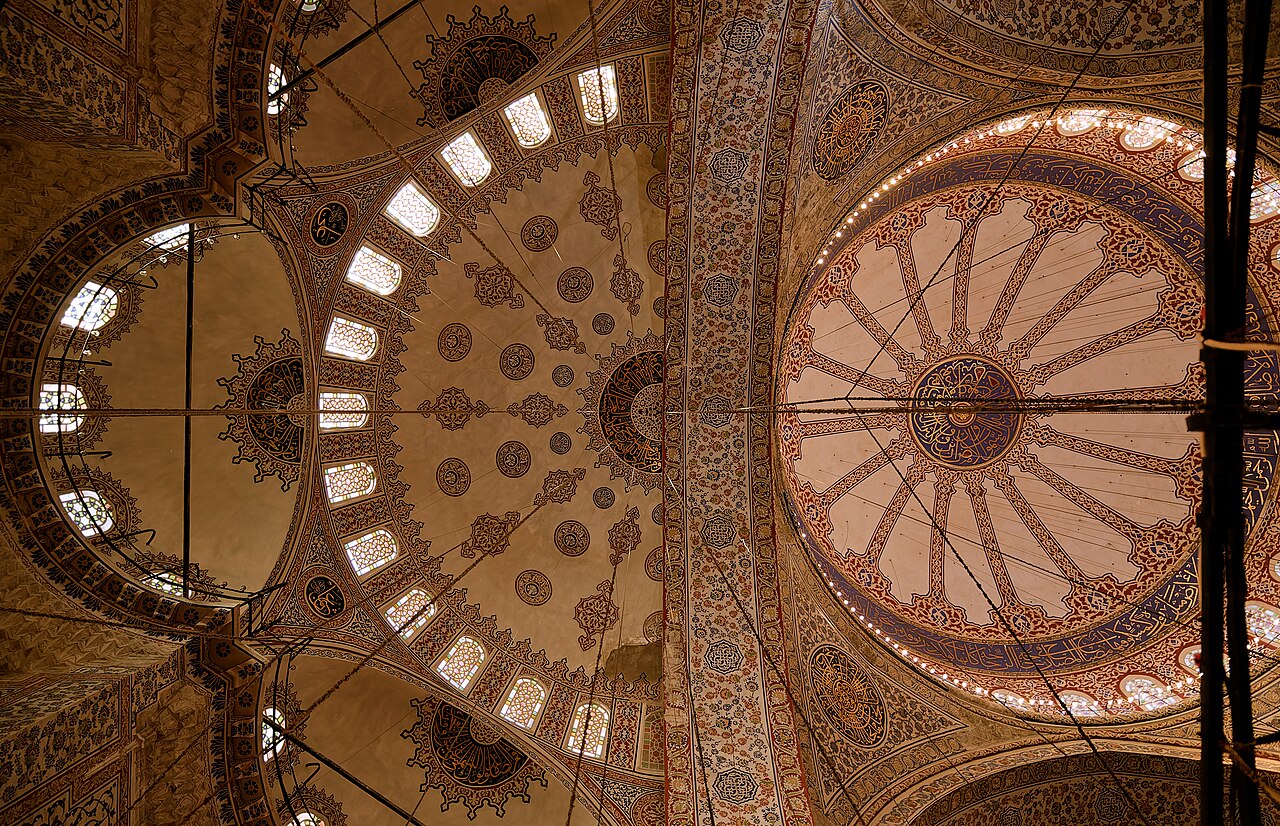
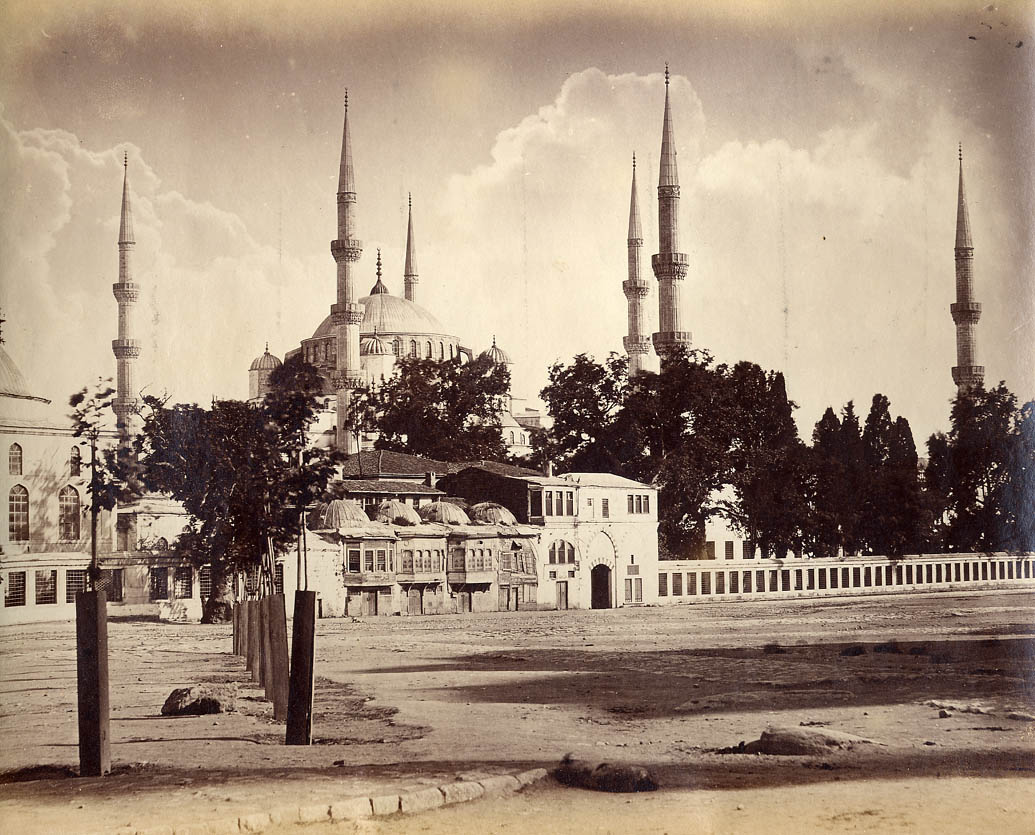
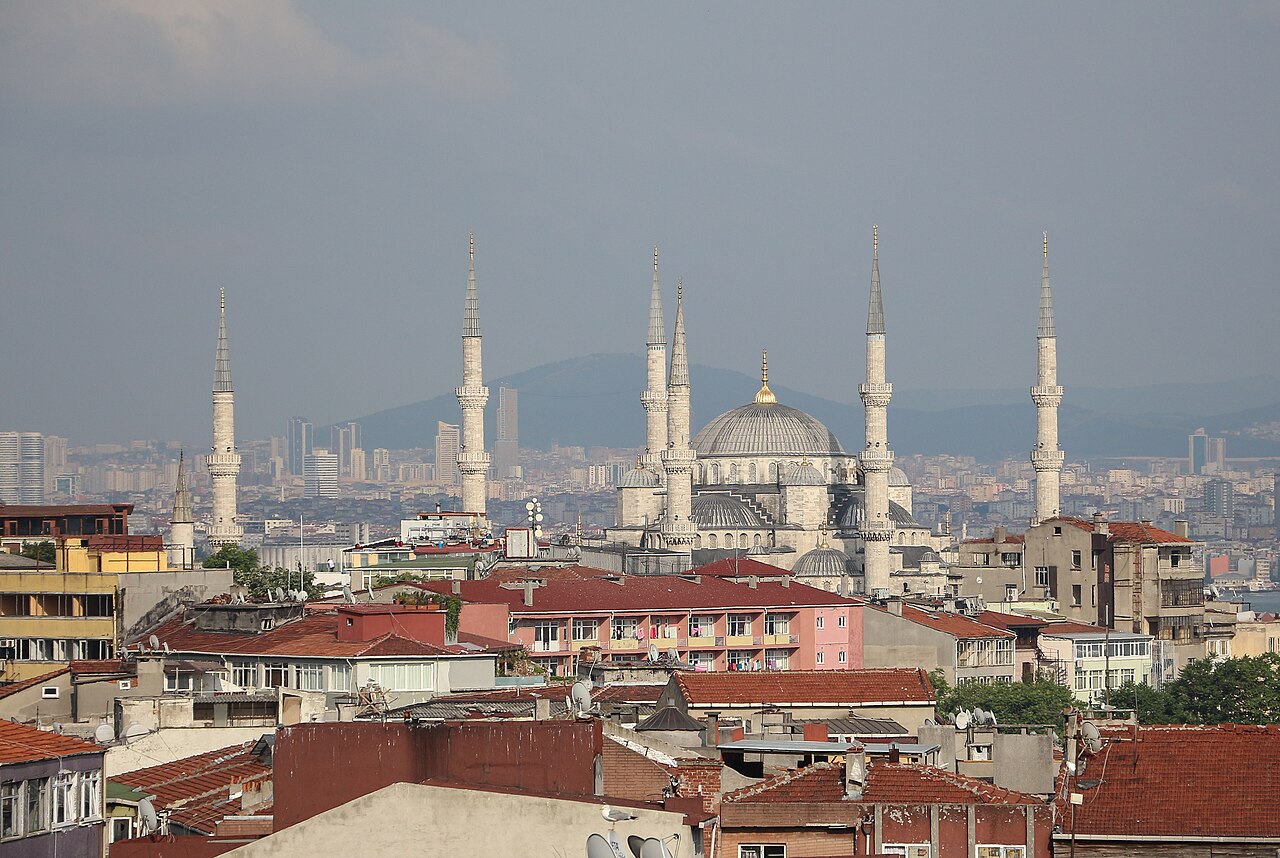
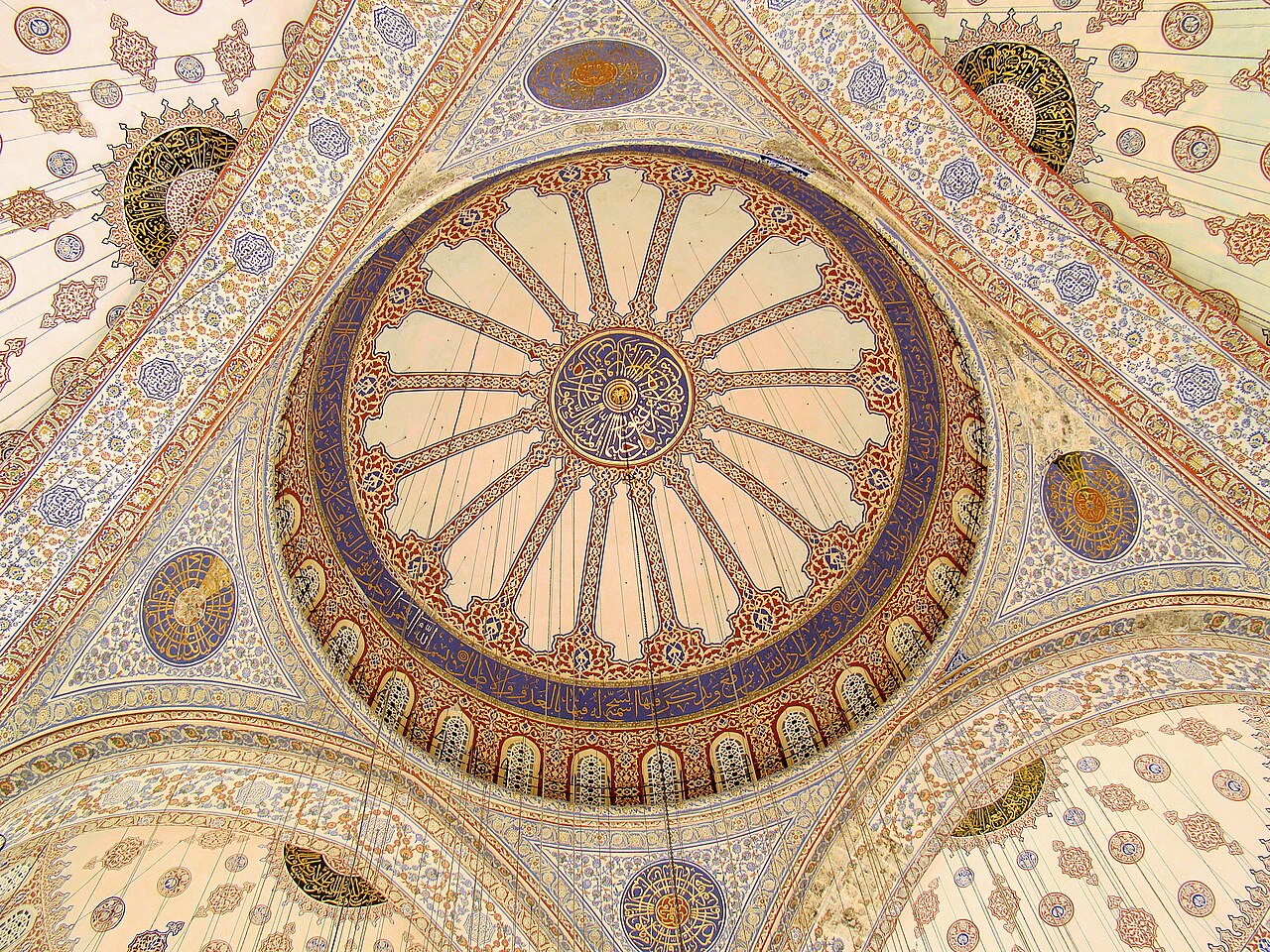
The Blue Mosque is a defining landmark of Istanbul and a masterpiece of classical Ottoman architecture. Its design, by Sedefkar Mehmed Agha, synthesizes the ideas of his master Mimar Sinan, aiming for overwhelming size and splendor. The mosque features a central dome 23.5 meters in diameter, surrounded by four semi-domes and smaller exedrae, with six minarets. The interior is decorated with thousands of Iznik tiles and painted floral motifs in predominantly blue colors, giving it its popular name. The mosque's külliye includes Ahmed's tomb, a madrasa, and other buildings. It stands across from Hagia Sophia and was included in the UNESCO World Heritage Site list in 1985. Despite initial controversy over its funding, it became one of the most popular mosques in Istanbul and gave its name to the surrounding Sultanahmet neighborhood. The mosque underwent restorations in 1883, after a 1912 fire, and a major 21st-century restoration that included repairing a shifted minaret, reopening in April 2023. Pope Benedict XVI visited in 2006, the second papal visit to a Muslim place of worship.
Did You Know?
- The mosque's popular name comes from the thousands of blue Iznik tiles and painted floral motifs inside.
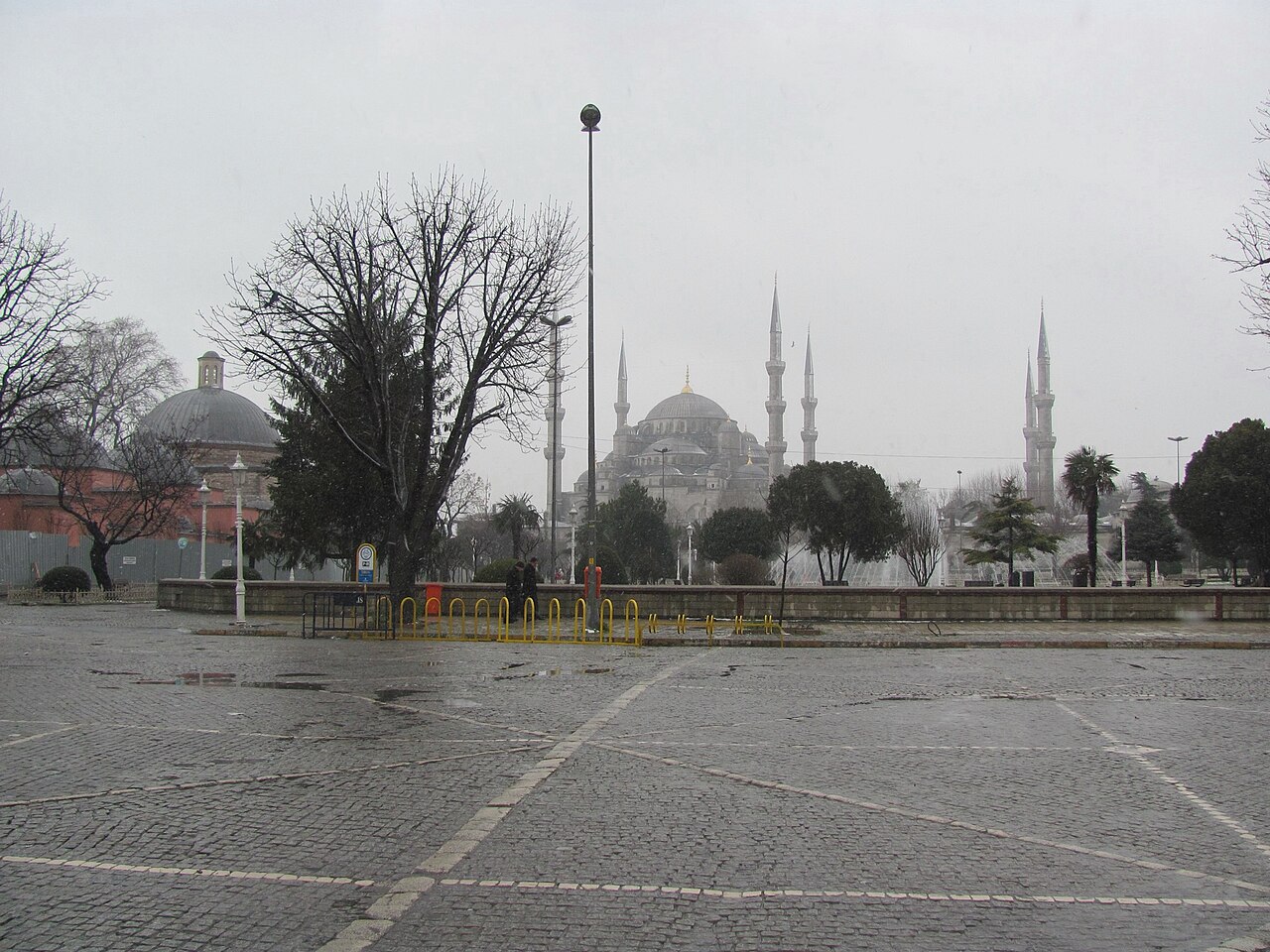
- It was built on the site of the former Hippodrome's bleachers and imperial box.
- The ulema initially forbade Muslims from praying at the mosque due to its funding from the treasury rather than spoils of conquest.
- Pope Benedict XVI visited the mosque in 2006, the first papal visit to a mosque in history.
UNESCO Recognition and the Historic Areas of Istanbul
The Blue Mosque sits within a broader UNESCO-recognized context that was formally inscribed at the ninth session of the World Heritage Committee in 1985. That year, three Turkish sites received their initial listing simultaneously: the Historic Areas of Istanbul, Göreme National Park and the Rock Sites of Cappadocia, and the Great Mosque and Hospital of Divriği. The Historic Areas of Istanbul inscription falls under the cultural heritage category, which the 1972 UNESCO World Heritage Convention defines to encompass monuments such as architectural works and monumental sculptures, groups of buildings, and sites including archaeological locations. Turkey had ratified the convention on March 16, 1983, setting the stage for these landmark inscriptions two years later. The 1985 listing thus represents the earliest formal international recognition of Istanbul's layered built environment, placing the mosque and its surrounding historic fabric under the protective umbrella of the World Heritage framework at a time when Turkey's entire portfolio consisted of just those three entries.
The Convention's Criteria and Classification System
Every site that enters the World Heritage register must satisfy at least one of ten established criteria, a structure that divides recognition into two broad families. Criteria one through six address cultural significance, covering aspects such as architectural achievement, exchange of values, and outstanding universal importance tied to human history. Criteria seven through ten shift the focus to natural heritage, encompassing physical and biological formations, geological and physiographical features including habitats of threatened species, and natural sites valued for scientific, conservation, or aesthetic reasons. The convention itself was established in 1972 by UNESCO, and its definitions of cultural heritage explicitly include monuments, groups of buildings, and archaeological sites. For a structure like the Blue Mosque, which is embedded in the Historic Areas of Istanbul, the relevant evaluation would draw on the cultural criteria, recognizing the architectural work as part of a broader ensemble of buildings that collectively demonstrate universal value to humanity's shared heritage.
Turkey's Evolving World Heritage Portfolio
Since those pioneering 1985 inscriptions, Turkey's World Heritage collection has grown to twenty-two sites, with twenty classified purely as cultural and two designated as mixed, meaning they carry both cultural and natural significance. The most recent addition to this roster came in 2025, when Sardis and the Lydian Tumuli of Bin Tepe were inscribed, extending the timeline of Turkish recognition across more than four decades. Beyond the formally listed properties, Turkey maintains a tentative list containing eighty additional sites that member states may consider for future nomination. This pipeline underscores the depth of the country's heritage inventory and signals that the Blue Mosque's context within Istanbul's historic core is part of a much larger national narrative of preservation. The contrast between the twenty-two inscribed sites and the eighty on the tentative list highlights both the ambition and the ongoing work required to secure international recognition for Turkey's diverse architectural, archaeological, and natural treasures.
The Nomination Pathway and Tentative List Requirement
Securing a place on the World Heritage List is not a single-step process; it demands that a site first appear on its member state's tentative list before any formal nomination can be submitted. This prerequisite ensures that countries conduct thorough preparatory work, documentation, and conservation planning before approaching the World Heritage Committee. Turkey currently holds eighty properties on its tentative list, a substantial queue that reflects the breadth of sites the nation wishes to see recognized over time. The convention, which Turkey accepted on March 16, 1983, provides the legal and procedural architecture for this staged approach. For the Historic Areas of Istanbul, which received its inscription at the 1985 ninth session, the path from tentative listing to full recognition would have involved demonstrating that the site met at least one of the six cultural criteria. The existence of this structured pathway means that the Blue Mosque's international standing is the product of deliberate national strategy, sustained documentation, and alignment with UNESCO's defined standards for universal cultural significance.
Gallery
Frequently Asked Questions
What is the Blue Mosque, Istanbul?
The Blue Mosque, officially the Sultan Ahmed Mosque, is a 17th-century Ottoman imperial mosque in Istanbul, Turkey. Commissioned by Sultan Ahmed I and finished in 1617, it stands as one of the most instantly recognizable landmarks of the city.
Who designed the Blue Mosque?
The mosque was designed by the Ottoman architect Sedefkar Mehmed Agha, a pupil of the celebrated Mimar Sinan. He completed the entire structure in roughly eight years, from 1609 to 1617.
Why is it called the 'Blue' Mosque?
The popular name comes from the thousands of hand-painted Iznik tiles in varying shades of blue that line the interior walls. These tiles cast a cool, luminous glow across the prayer hall that has defined the mosque's nickname since the 18th century.
How many minarets does the Blue Mosque have?
The mosque features six minarets, a number that was considered extraordinary for its era because it rivaled the Grand Mosque in Mecca. This made the building a source of some religious controversy when it first rose in the early 1600s.
Is the Blue Mosque a UNESCO World Heritage Site?
Yes, it is part of the 'Historic Areas of Istanbul' UNESCO World Heritage inscription, which was added to the list in 1985. The designation covers a cluster of Ottoman-era monuments in the city center, with the Blue Mosque serving as one of the most prominent among them.
More in World Heritage Sites in Turkey 1-24
Spotted an error? Know more?
This is a living reference — every entry is fact-audited, and reader corrections feed straight into our audit queue. Suggest an edit · See this site's audit record