
Cappadocia
Historical region in central Turkey with unique rock formations.

Peretz Partensky from San Francisco, USA · CC BY-SA 2.0
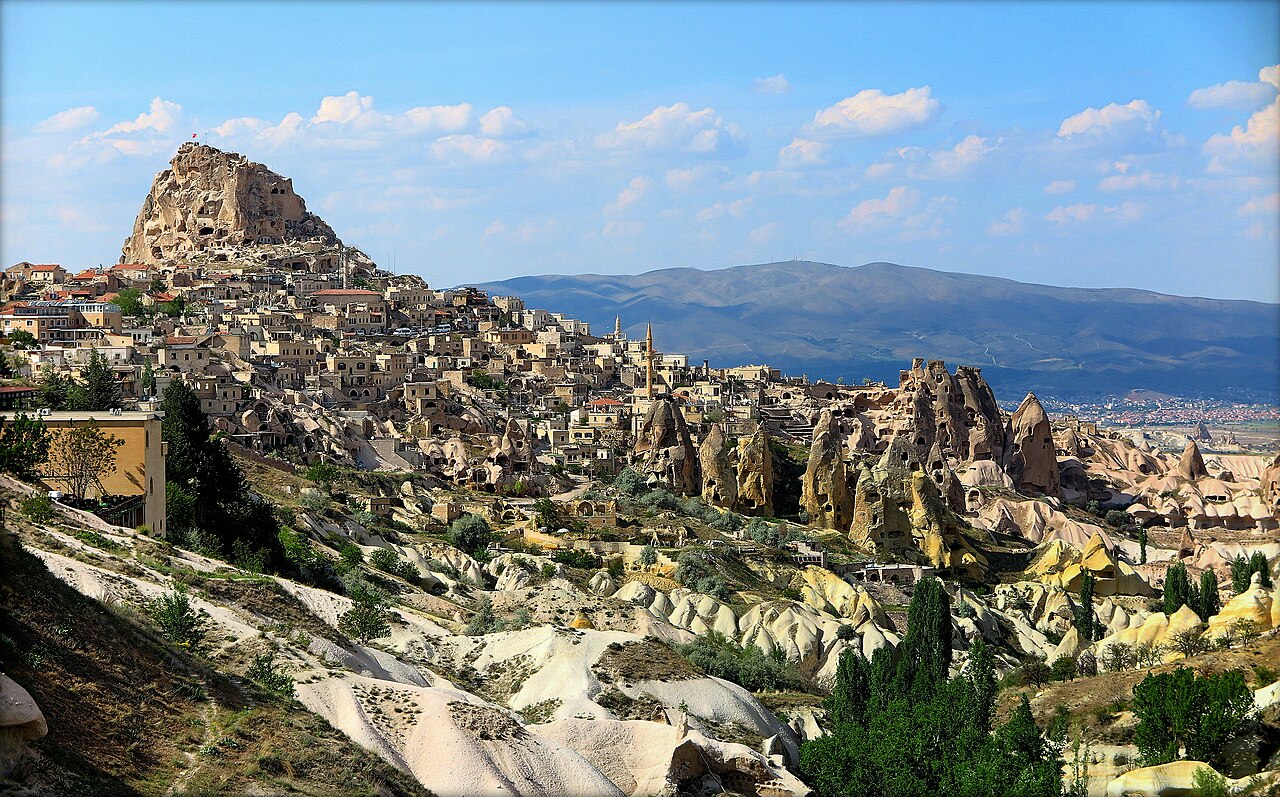
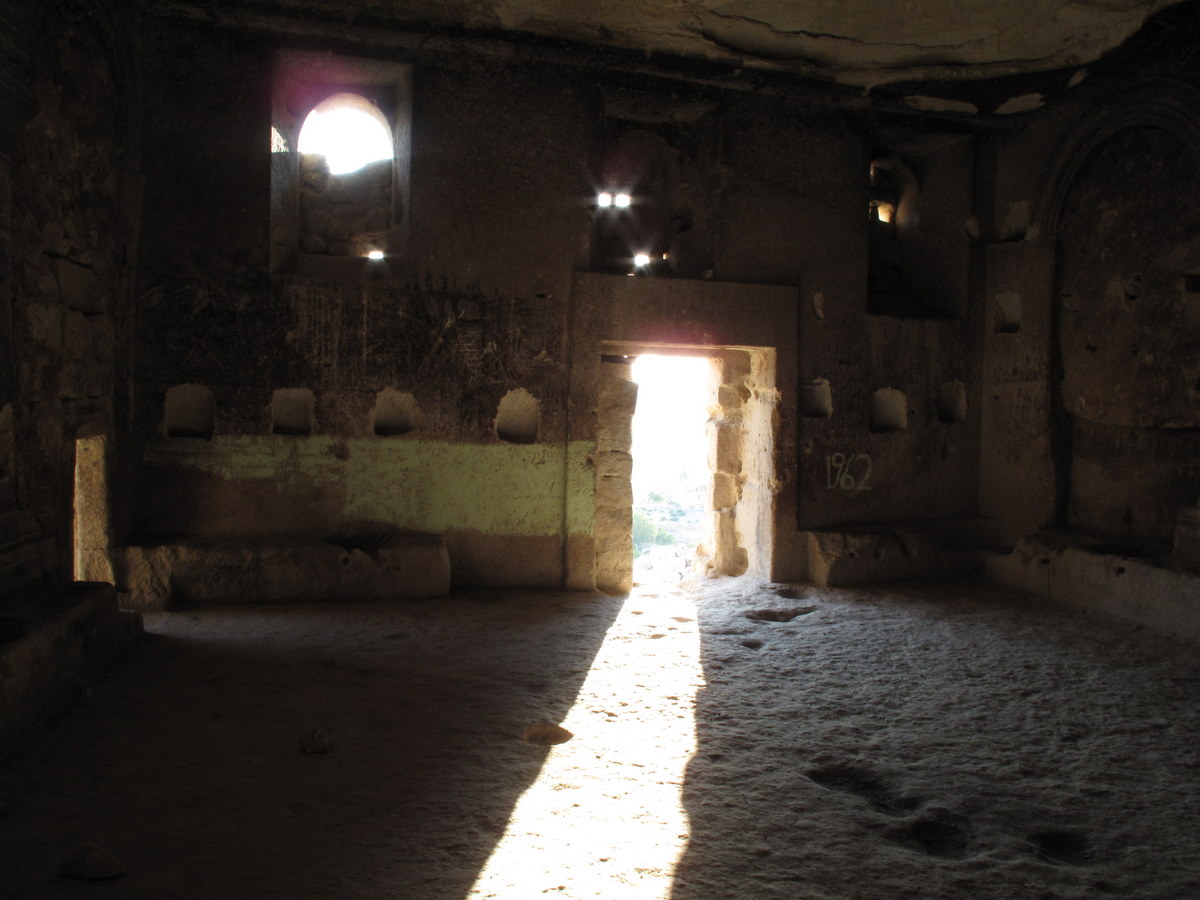
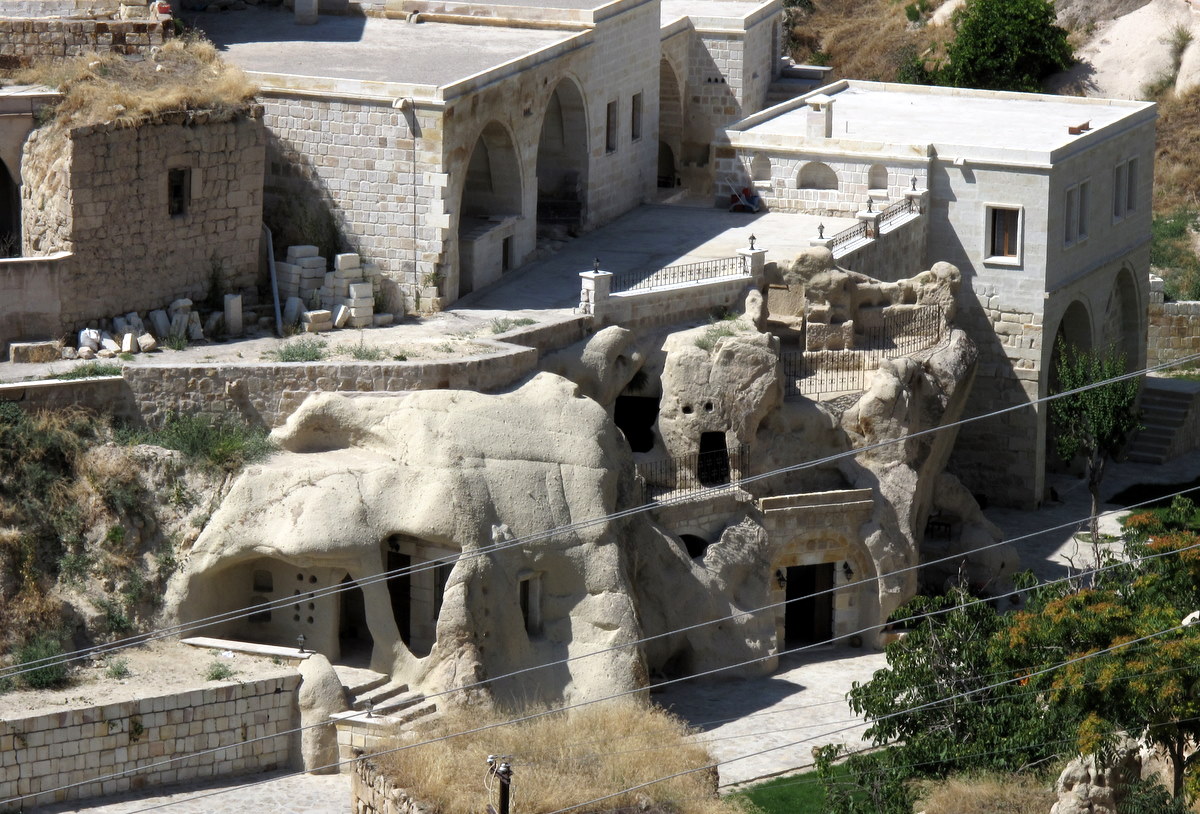
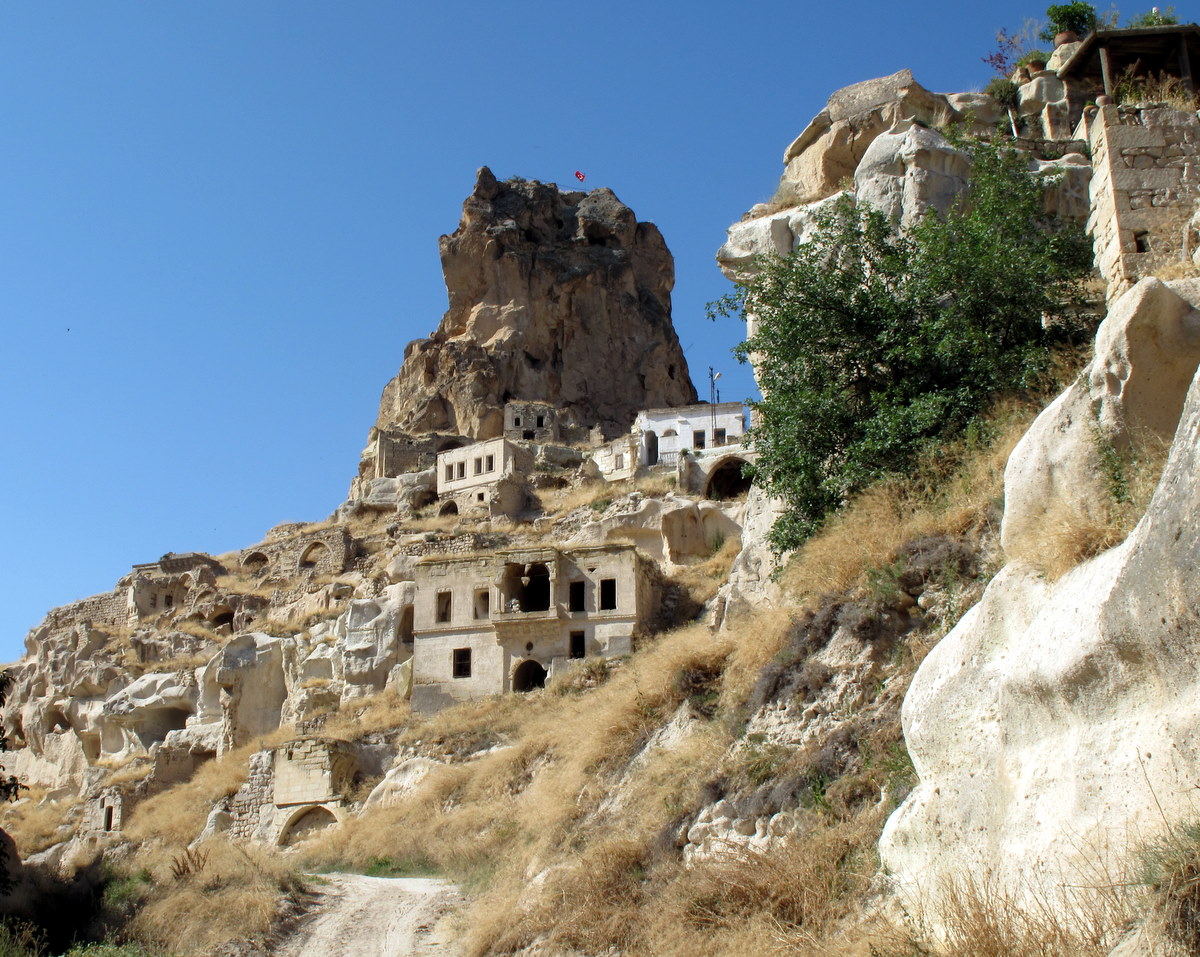
Cappadocia is a historical region in Central Anatolia, Turkey, largely in the provinces of Nevşehir, Kayseri, Aksaray, Sivas and Niğde. Known for its exceptional natural wonders, including fairy chimneys, and its religious heritage as a centre of early Christian learning, it features hundreds of churches and monasteries, as well as underground cities dug for protection during periods of persecution.
- provinces
- Nevşehir, Kayseri, Aksaray, Sivas, Niğde
- notable_peak
- Mount Erciyes (ancient Argaeus), 3,917 m
Lore & Background
The earliest record of the name Cappadocia dates from the late sixth century BC, appearing in trilingual inscriptions of Darius the Great and Xerxes I as one of the countries (Old Persian dahyu-). The Old Persian name is Katpatuka, possibly from Hittite katta peda- meaning 'place below'. Herodotus wrote that the Persians applied the name Cappadocians, while Greeks called them 'White Syrians' (Leucosyri), likely descendants of the Hittites. Under later Persian kings, Cappadocia was divided into two satrapies: the central inland portion (Great Cappadocia) and Pontus.
Reader's Guide
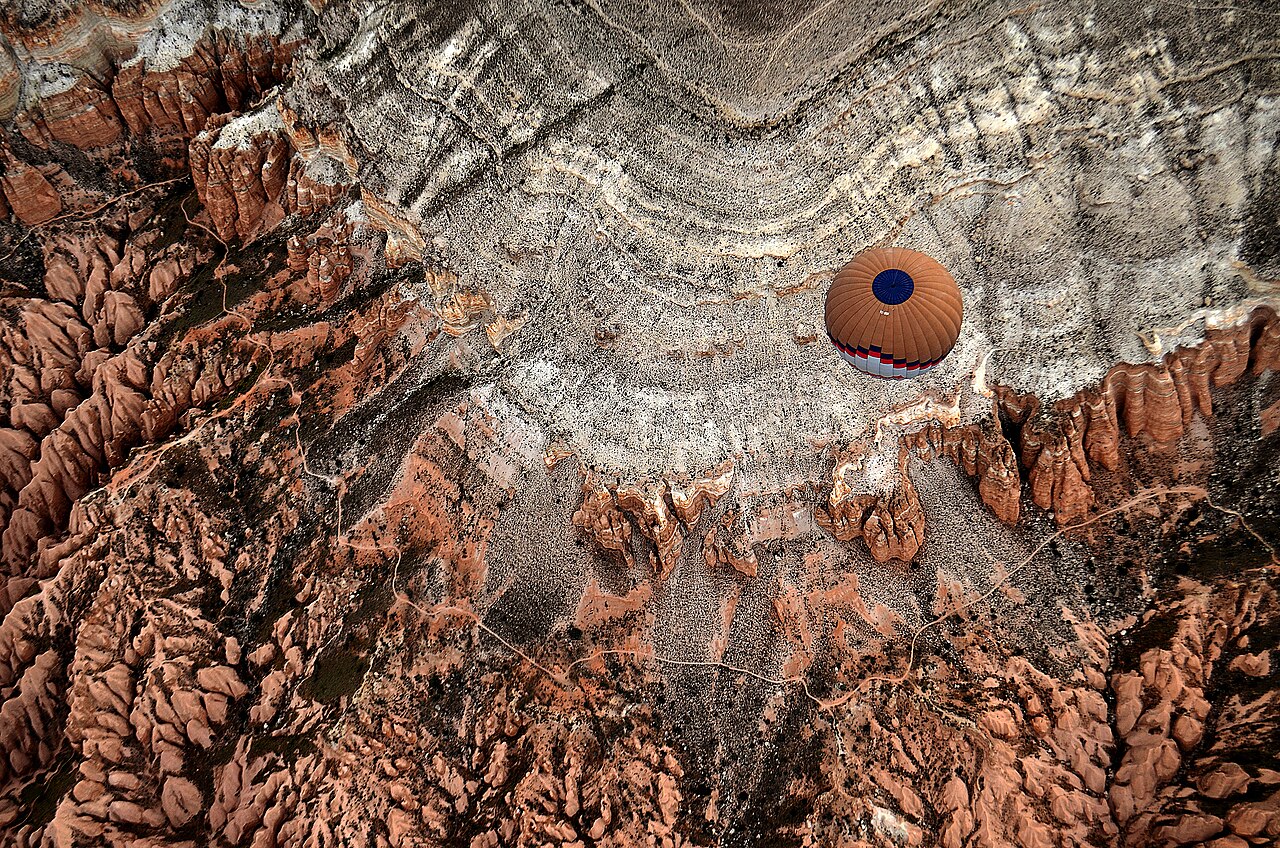
Cappadocia's significance lies in its dual role as a natural wonder and a historical religious centre. The region's distinctive landscape was formed through erosion of thick volcanic deposits from ancient eruptions of Mount Erciyes, Mount Hasan, and Göllüdağ, creating fairy chimneys and rock formations. In October 2022, the International Union of Geological Sciences included the Miocene Cappadocian ignimbrites sequence in its list of 100 geological heritage sites. Historically, Cappadocia was the homeland of the Hittite power centred at Hattusa, later ruled by a feudal aristocracy. After Alexander the Great, Ariarathes I declared himself king, founding a dynasty. The kingdom came into relations with Rome under Ariarathes IV. Cappadocia also preserved Persian Zoroastrian practices, with Strabo noting fire temples and 'fire kindlers' in the first century BC.
Did You Know?
- The name Cappadocia appears in trilingual inscriptions of Darius the Great and Xerxes I from the late sixth century BC.
- Herodotus reported that Cappadocians were called 'White Syrians' by Greeks and were likely descendants of the Hittites.
- The region's fairy chimneys formed through erosion of volcanic deposits from Mount Erciyes, Mount Hasan, and Göllüdağ.
- The Miocene Cappadocian ignimbrites sequence was designated an IUGS Geological Heritage Site in 2022.
Cappadocia's Historic 1985 Inscription
The Göreme National Park and the Rock Sites of Cappadocia hold a distinguished place in Turkey's UNESCO history. When Turkey ratified the 1972 World Heritage Convention on March 16, 1983, the nation entered a global framework for protecting sites of outstanding cultural and natural significance. Just two years later, at the 9th Session of the World Heritage Committee in 1985, Cappadocia was among the very first Turkish properties to earn this recognition. It shared that inaugural milestone with the Great Mosque and Hospital of Divriği and the Historic Areas of Istanbul. Being part of this founding trio of inscriptions underscores how early the international community recognized Cappadocia's irreplaceable value. For a region defined by its dramatic rock formations and ancient human habitation, that 1985 designation was not merely a bureaucratic entry—it was a declaration that the landscape and its heritage warranted the highest level of international protection.
A Dual Heritage: Cultural and Natural Significance
Cappadocia's inscription as a World Heritage Site reflects the convention's dual understanding of what makes a place irreplaceable. Under the 1972 framework, cultural heritage encompasses monuments, architectural works, groups of buildings, and archaeological sites, while natural heritage covers geological and physiographical formations, biological features, and landscapes of scientific or aesthetic importance. Cappadocia, designated as one of only two mixed sites in Turkey's portfolio of 22 inscriptions, embodies both dimensions simultaneously. Its rock formations and geological character speak to the natural criteria, while the archaeological and architectural evidence of human presence engages the cultural criteria. Each of the ten UNESCO criteria represents a distinct lens—monumental artistry, cultural exchange, natural beauty, threatened habitats—and a qualifying site must satisfy at least one. Cappadocia's mixed status signals that its significance cannot be reduced to a single category; the landscape and the human story woven into it are inseparable.
Cappadocia Within Turkey's Broader World Heritage Landscape
Cappadocia's 1985 inscription was the opening chapter in what has become a substantial Turkish contribution to the global World Heritage register. Today, Turkey counts 22 inscribed sites, with 20 recognized purely for cultural values and 2—Cappadocia among them—honored for both cultural and natural significance. The list has continued to grow; the most recent addition, Sardis and the Lydian Tumuli of Bin Tepe, was inscribed in 2025, demonstrating that Turkey's heritage story is still unfolding. Beyond the inscribed sites, the country maintains a tentative list of 80 properties, a pipeline of locations that may one day join the register. This broader context highlights how Cappadocia, as part of the first wave of Turkish inscriptions, helped establish the precedent. It also shows that the nation's commitment to heritage protection extends far beyond any single region, encompassing mosques, historic urban areas, archaeological mounds, and natural landscapes across the country.
The Road to Recognition: Conventions, Criteria, and Nominations
Behind Cappadocia's World Heritage status lies a carefully structured international process. The 1972 UNESCO World Heritage Convention created the legal and conceptual architecture for identifying and protecting sites of outstanding universal value. Turkey's ratification on March 16, 1983, committed the nation to this framework and opened the door for its properties to be considered. A critical procedural rule governs the path to inscription: a site must first appear on its country's tentative list before a nomination can be submitted to the World Heritage Committee. Turkey's tentative list currently holds 80 properties, representing a broad spectrum of potential candidates. Once nominated, a site is evaluated against ten criteria—six cultural and four natural—and must meet at least one to qualify. Cappadocia's journey through this process, culminating in its 1985 inscription at the 9th Committee Session, illustrates how a region's geological wonder and archaeological depth can converge to satisfy the convention's standards and earn a place on the world's most prestigious heritage register.
Gallery
Frequently Asked Questions
Where exactly is Cappadocia located in Turkey?
Cappadocia is a historical region in Central Anatolia that stretches across the provinces of Nevşehir, Kayseri, Aksaray, Sivas, and Niğde.
What makes Cappadocia's natural landscape so distinctive?
The area is defined by its dramatic volcanic rock formations, most famously the slender, cone-shaped pillars known as fairy chimneys, which give the terrain an almost otherworldly look.
Why is Cappadocia significant in early Christian history?
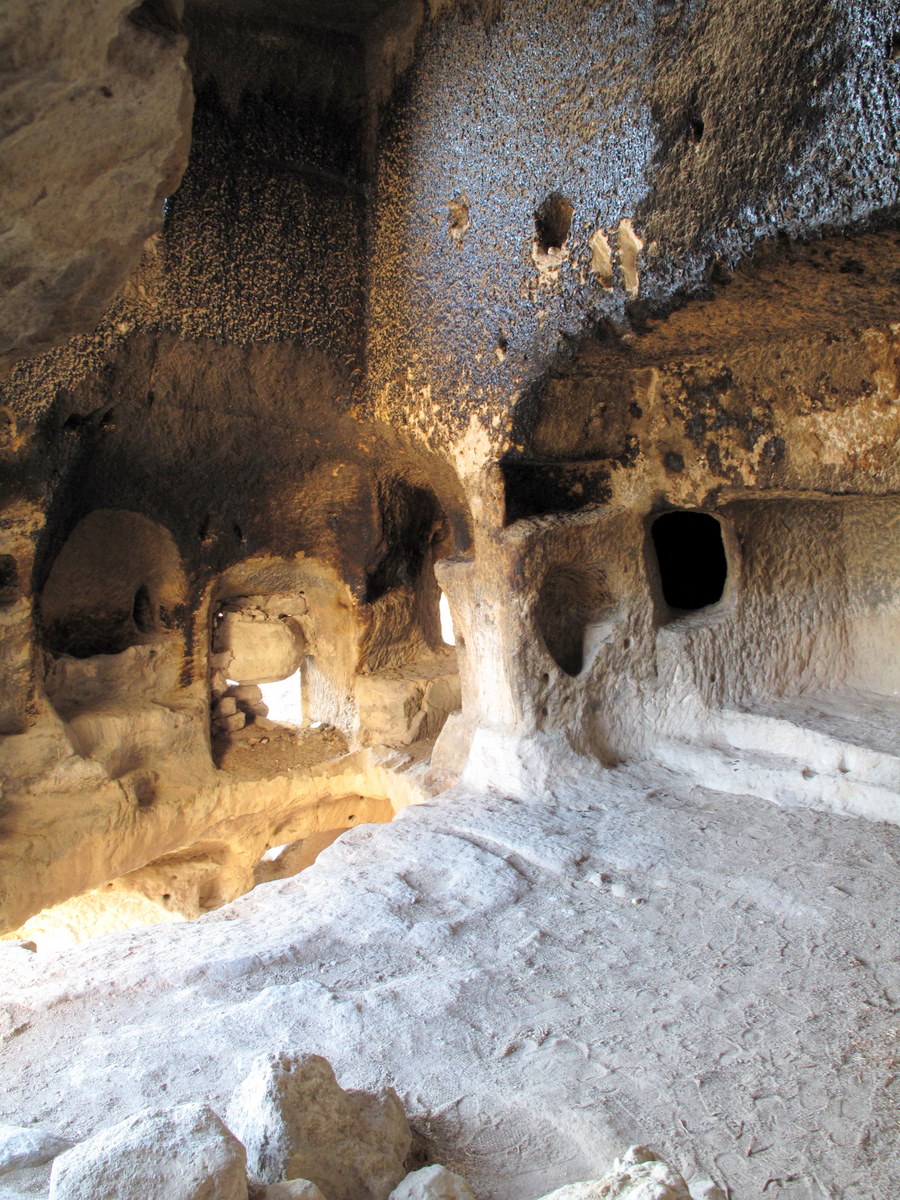
It served as a major hub of early Christian learning, and the soft rock was carved into hundreds of churches and monasteries that still dot the region today.
What are the underground cities and why were they built?
These are extensive subterranean settlements hewn into the volcanic rock, originally created to shelter communities from persecution during turbulent periods of the past.
What is the tallest peak associated with the Cappadocia region?
Mount Erciyes, called Argaeus in antiquity, stands at 3,917 metres and is the highest point in the area.
More in World Heritage Sites in Turkey 1-24
Spotted an error? Know more?
This is a living reference — every entry is fact-audited, and reader corrections feed straight into our audit queue. Suggest an edit · See this site's audit record