
Ani
Ruined medieval Armenian capital, once a major trade and cultural hub.

Francesco Bini · CC BY-SA 4.0
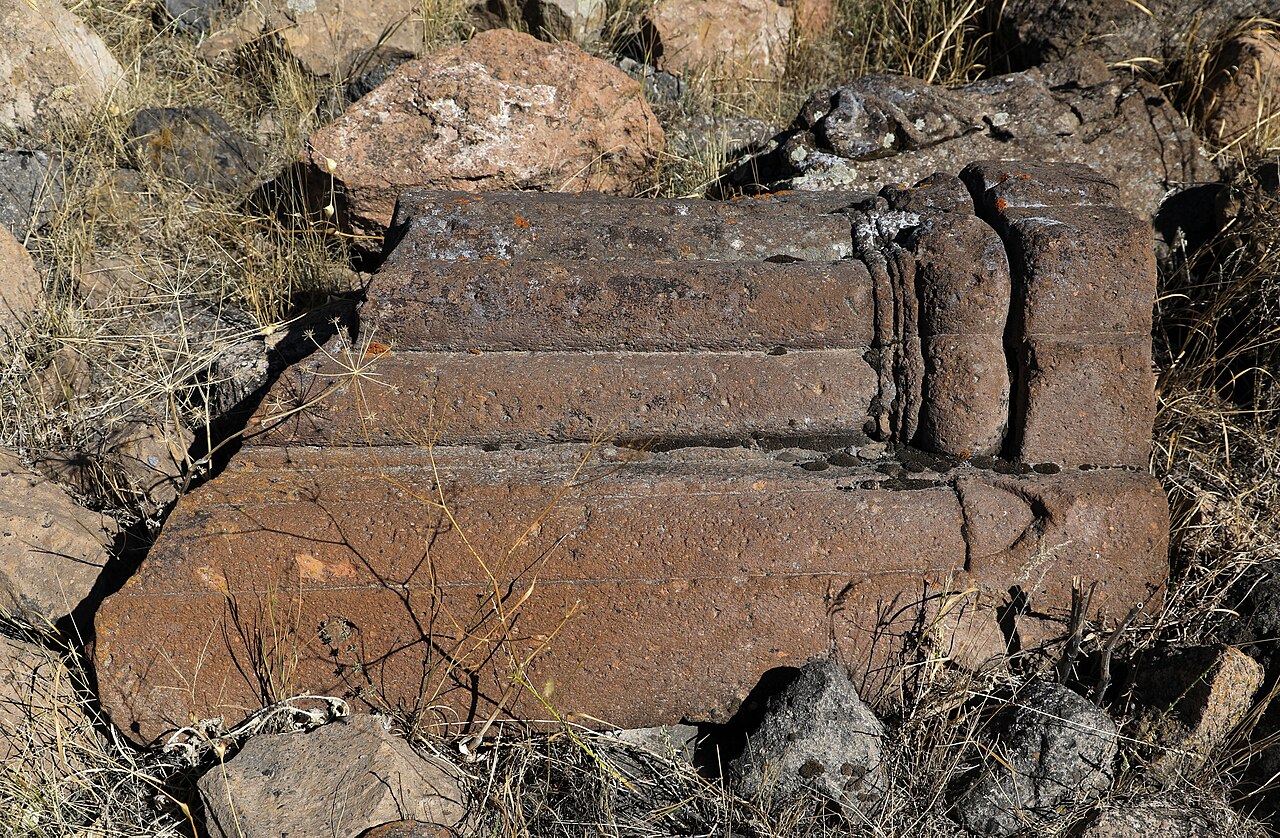
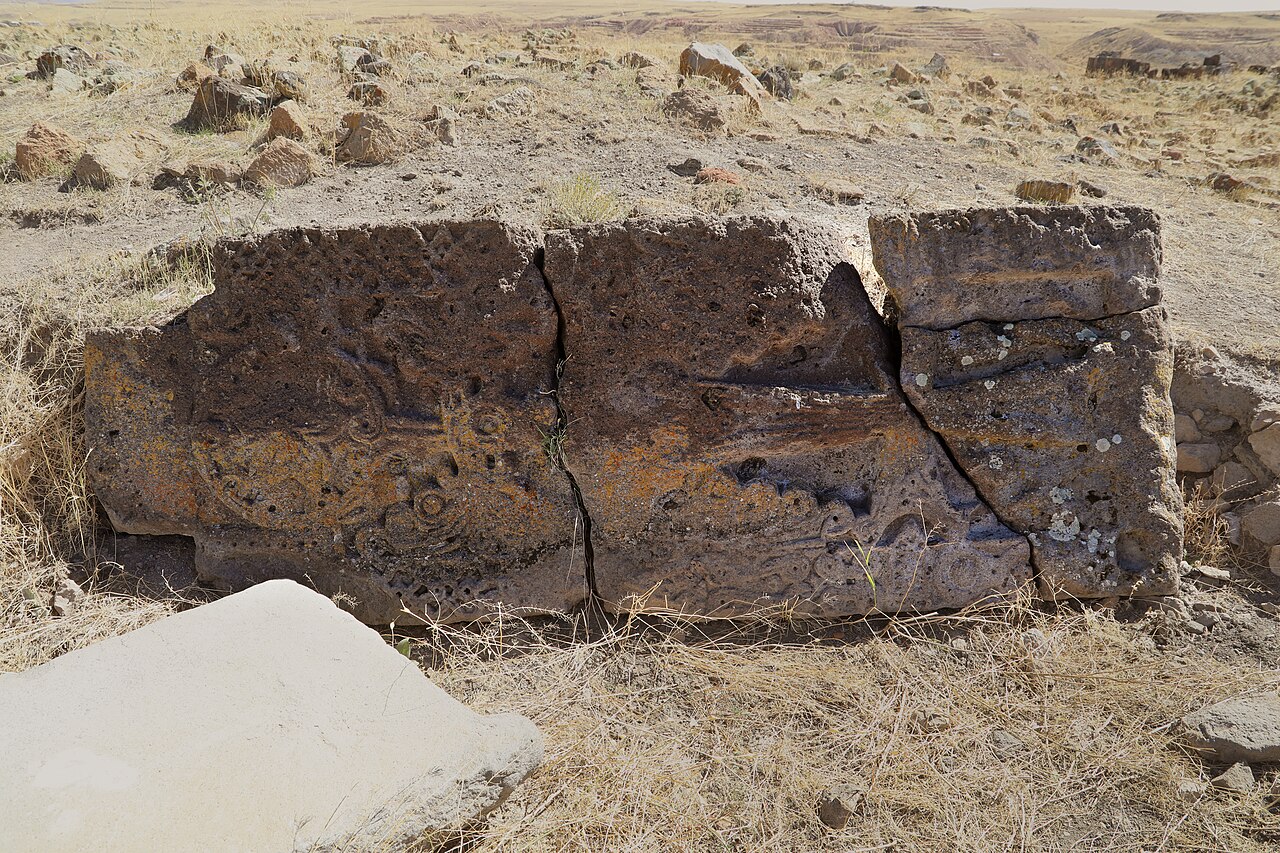
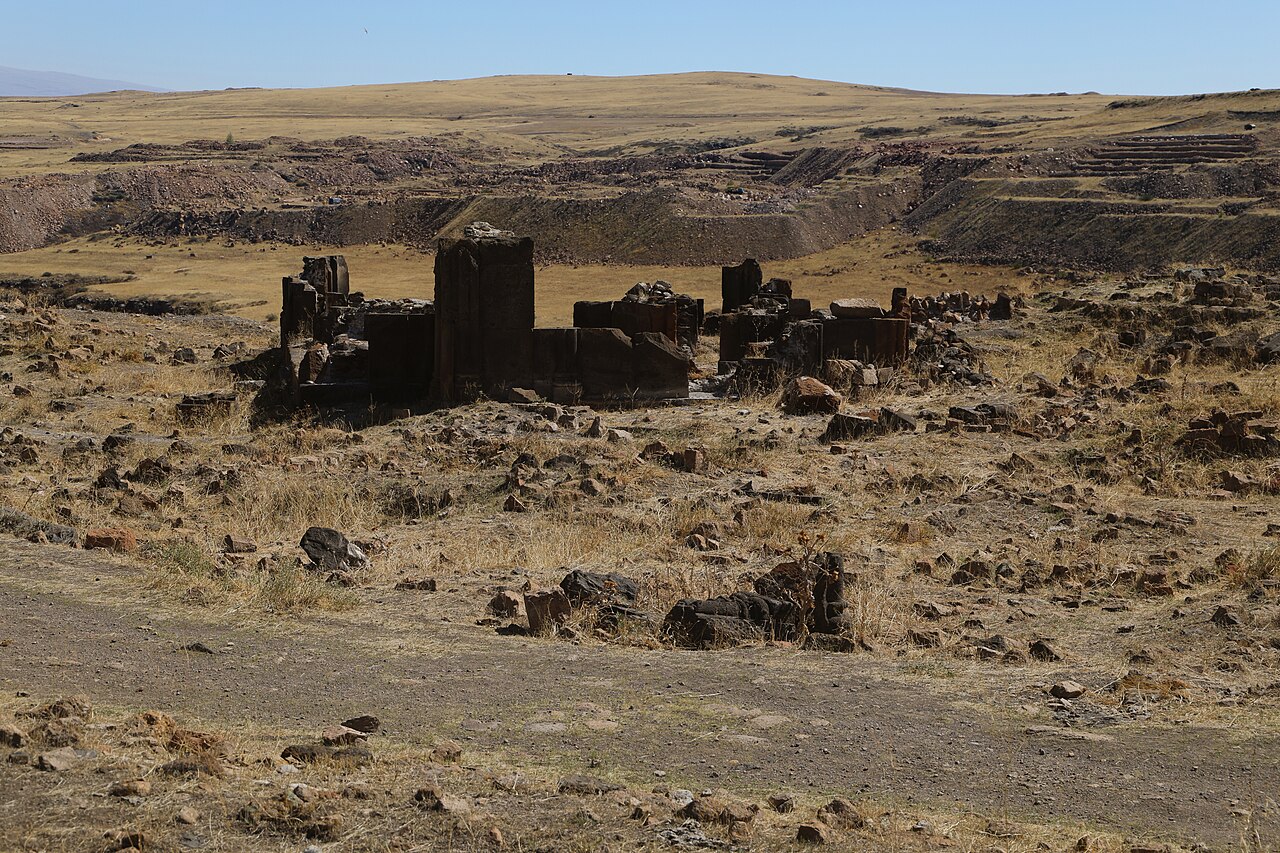
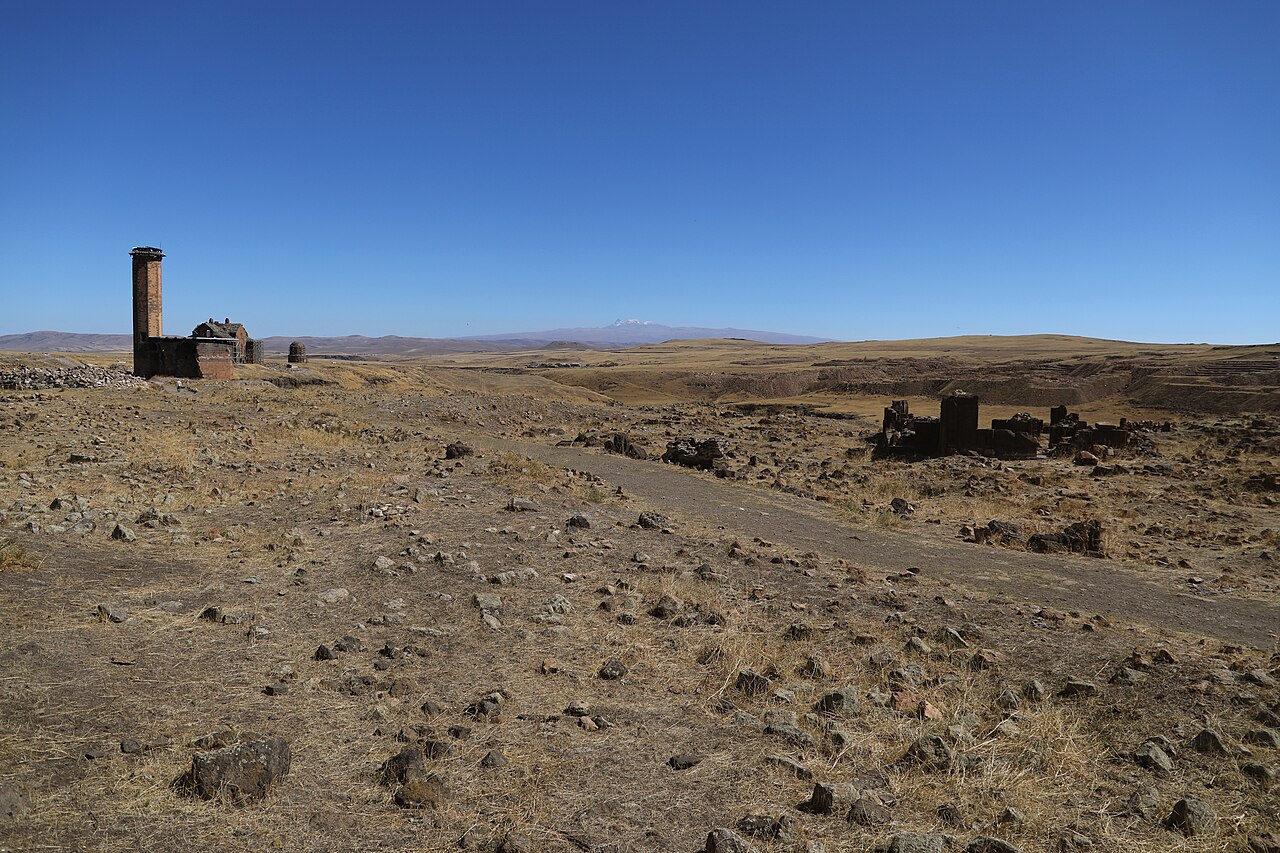
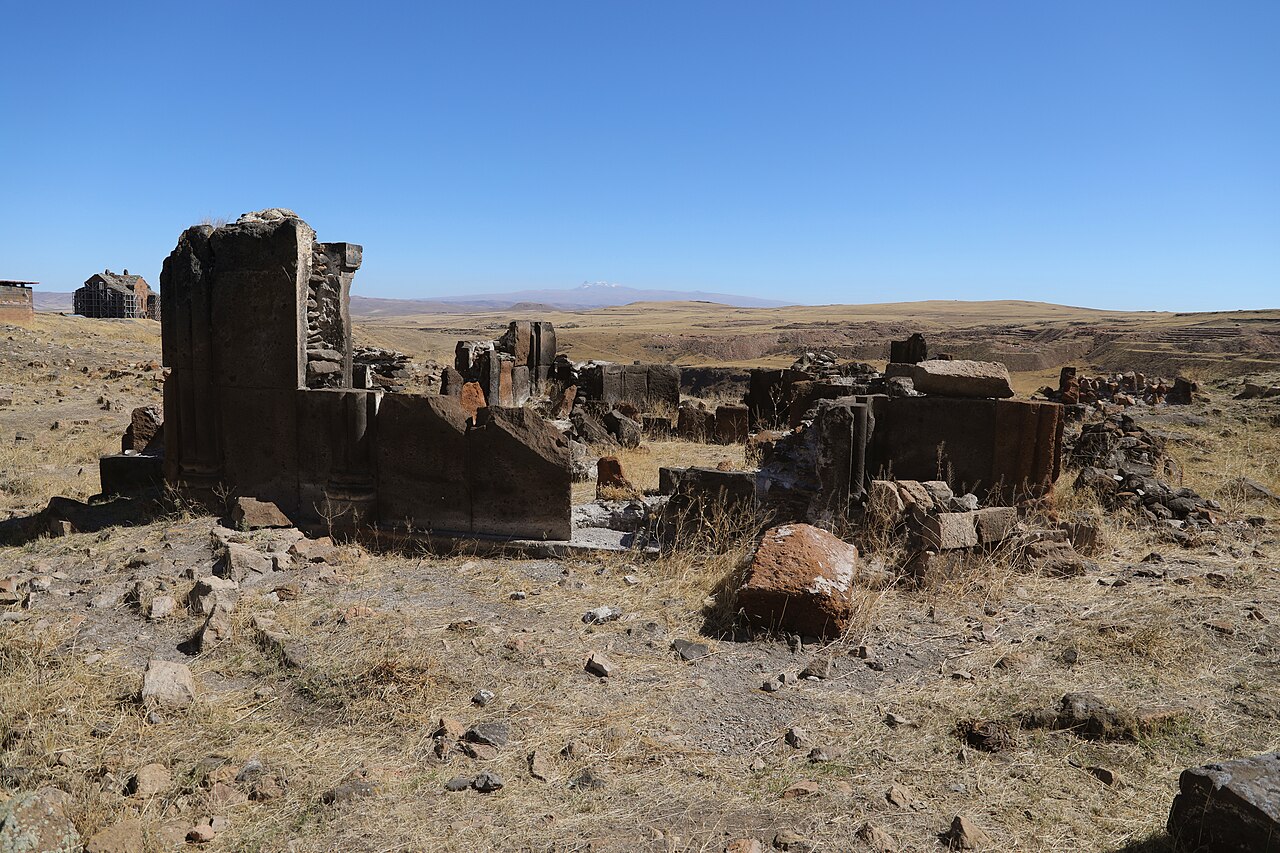
Ani is a ruined medieval Armenian city located in Turkey's province of Kars, near the closed border with Armenia. Between 961 and 1045, it served as the capital of the Bagratuni Armenian kingdom, which covered much of present-day Armenia and eastern Turkey. Known as the 'City of 1,001 Churches,' Ani was a major urban center on various trade routes, distinguished by its religious buildings, palaces, and sophisticated fortifications.
- Location
- Kars Province, Turkey
- Period of Capital Status
- 961–1045
- Population at Height
- Perhaps 100,000 (disputed)
- Excavated Religious Structures
- 50 churches, 33 cave chapels, 20 chapels
- UNESCO Listing
- 2016
- Known For
- Bagratuni Armenian capital, 'City of 1,001 Churches', early Gothic architecture influence
Lore & Background
Ani was first mentioned in the 5th century by Armenian chroniclers as a strong fortress of the Kamsarakan dynasty. By the early 9th century, it came under the Bagratuni dynasty, which secured independence from Arab control under King Ashot I. King Ashot III transferred the capital to Ani in 961, and the city expanded rapidly under King Smbat II. The Cathedral of Ani, built during this period, features ribbed vaulting—a technique that appeared in European Romanesque architecture, such as at Durham Cathedral, only about a century later, highlighting the advanced engineering of its builders.
At its height, Ani was one of the world's largest cities, with a population perhaps reaching 100,000, though historians have cast doubt on this estimate due to its limited area. The city was sacked by the Mongols in 1236 and never recovered from a devastating earthquake in 1319, combined with shifting trade routes. It was abandoned by the 17th century. Ani is a widely recognized cultural, religious, and national heritage symbol for Armenians, described by Razmik Panossian as one of the most visible and tangible symbols of past Armenian greatness.
Reader's Guide
Ani's significance lies in its role as the capital of the Bagratuni Armenian kingdom during a golden age of Armenian art and architecture. The city's Cathedral of Ani is particularly notable for its early use of ribbed vaulting, a feature that would not appear in European cathedrals for at least another two centuries, suggesting a potential influence on the development of Gothic architecture. Ani's location on trade routes made it a wealthy and cosmopolitan center, though its population estimates remain debated. The city's decline after the Mongol sack and the 1319 earthquake, combined with the shift of regional trade routes, led to its abandonment by the 17th century. In 2016, Ani was added to the UNESCO World Heritage List, transforming from a site of geopolitical instability into a center of cultural tourism that may foster cultural exchange and historical understanding. The Turkish government previously attempted to obscure the city's name as 'Anı' to give it a more Turkish character, reflecting ongoing tensions over its heritage.
Did You Know?
- Ani was known as the 'City of 1,001 Churches,' though the actual number of excavated churches is 50, along with 33 cave chapels and 20 chapels.
- The Cathedral of Ani features ribbed vaulting—a technique that appeared in European Romanesque cathedrals like Durham Cathedral only about a century later.
- Ani was sacked by the Mongols in 1236 and never recovered from a devastating earthquake in 1319.
- The Turkish government previously attempted to rename the city 'Anı' to give it a more Turkish character.
The Convention and Turkey's Participation
The UNESCO World Heritage Convention, adopted in 1972, created an international framework for identifying and safeguarding places of exceptional cultural or natural significance. Under this system, cultural heritage covers monuments such as architectural works, inscriptions, and monumental sculptures, as well as groups of buildings and archaeological sites. Natural heritage, meanwhile, encompasses physical and biological formations, geological and physiographical features, habitats supporting threatened species, and sites valued for their scientific, conservation, or aesthetic importance. Turkey formally joined this global effort by ratifying the convention on March 16, 1983, committing to the identification and protection of qualifying sites within its borders. The convention evaluates nominations against ten distinct criteria—six addressing cultural values and four addressing natural values—requiring every candidate site to satisfy at least one criterion before it can earn a place on the World Heritage List.
Turkey's Inscribed Heritage Portfolio
Turkey currently holds 22 inscribed World Heritage Sites, of which 20 are recognized solely for their cultural significance and 2 carry a dual designation as mixed sites valued for both cultural and natural attributes. The country's first entries arrived at the 9th Session of the World Heritage Committee in 1985, when three sites were inscribed simultaneously: Göreme National Park and the Rock Sites of Cappadocia, the Great Mosque and Hospital of Divriği, and the Historic Areas of Istanbul. This inaugural trio showcased a remarkable range, spanning dramatic rock-cut landscapes, monumental Seljuk-era religious architecture, and a sprawling historic urban core. Together, these early designations demonstrated the breadth of heritage Turkey could offer the international register, from natural geological formations to layered urban histories, and established a foundation for the country's continued participation in the World Heritage program over the following decades.
The Tentative List and Nomination Pathway
In addition to its 22 inscribed sites, Turkey maintains a tentative list of 80 properties that the nation may pursue for future World Heritage nomination. This preliminary register is not merely an aspirational catalogue; it is a structural prerequisite in the UNESCO process. A site cannot be formally submitted for inscription unless it first appears on the tentative list, making this register the essential gateway through which all future nominations must pass. The presence of 80 candidate properties underscores a substantial pipeline of heritage resources that Turkey is actively evaluating, documenting, and preparing for potential international recognition. The tentative list thus functions as both a long-range planning instrument and a public declaration of the nation's heritage ambitions, reflecting the depth and geographic spread of sites across Turkey that remain candidates for the ultimate step of World Heritage designation.
A Growing Register: 1985 to 2025
Turkey's World Heritage portfolio has expanded and diversified considerably since its first inscriptions in 1985. The original trio—Göreme and the Cappadocian rock sites, the Divriği mosque and hospital, and Istanbul's historic areas—marked the country's entry into the international register. Four decades later, in 2025, the list grew with the inscription of Sardis and the Lydian Tumuli of Bin Tepe, the most recent addition to Turkey's World Heritage collection. This forty-year arc illustrates a sustained commitment to heritage preservation at the global level, with each new entry reflecting ongoing archaeological research, conservation work, and a deepening understanding of what constitutes heritage of universal value. The progression from early rock-cut landscapes and medieval architecture to ancient Lydian burial mounds highlights the remarkable chronological and typological range of Turkey's heritage, spanning millennia of human history and natural formation.
Gallery

Frequently Asked Questions
Where is Ani and what was it?
Ani sits in Kars Province in eastern Turkey, right near the sealed border with Armenia. It served as the medieval capital of the Bagratuni Armenian kingdom, functioning as a major trade and cultural crossroads from the 10th through the early 11th century.
Why is Ani called the 'City of 1,001 Churches'?
The nickname reflects the extraordinary density of religious buildings that once filled the cityscape. Excavations have revealed roughly 50 standing churches, 33 cave chapels, and 20 additional chapels, making it one of the most ecclesiastically rich medieval settlements in the region.
How large was Ani at its height?
Estimates for the peak population vary, but many scholars suggest the city may have housed around 100,000 residents during its 961–1045 reign as capital. That figure remains debated, yet even conservative counts place Ani among the largest urban centers of its era in the Caucasus.
What makes Ani architecturally significant?
The city's stone churches and palaces display early experiments with pointed arches and ribbed vaults that later became hallmarks of Gothic construction in Europe. Because of this, Ani is often cited as a formative influence on the architectural vocabulary that would spread westward centuries later.
When was Ani inscribed as a UNESCO World Heritage Site?
UNESCO added Ani to its World Heritage list in 2016, recognizing its outstanding universal value as a medieval Armenian capital and its rich ensemble of religious and civic ruins. The inscription followed decades of excavation and preservation work in the Kars region.
More in World Heritage Sites in Turkey 1-24
Spotted an error? Know more?
This is a living reference — every entry is fact-audited, and reader corrections feed straight into our audit queue. Suggest an edit · See this site's audit record